

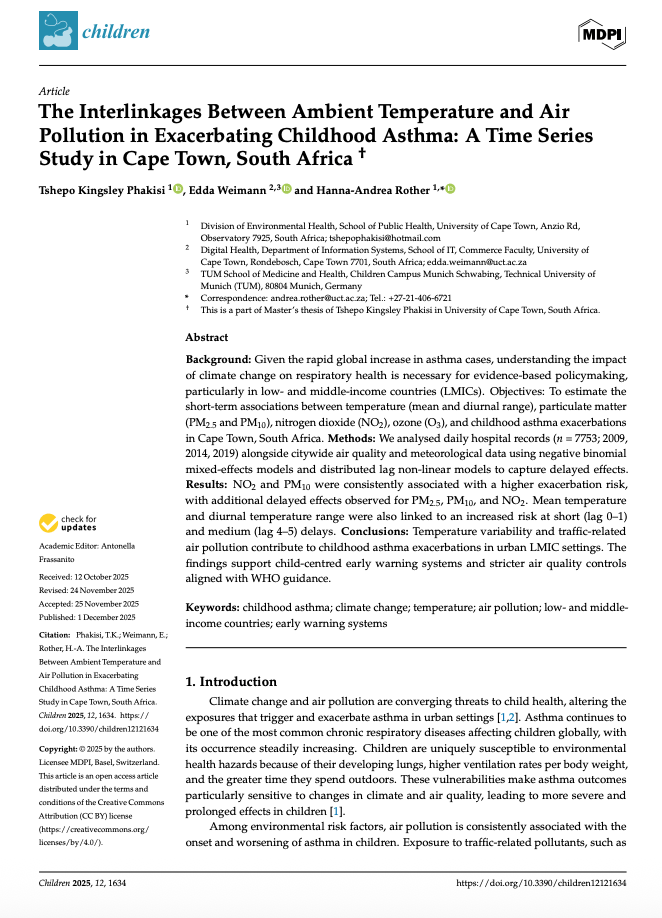
Children 1 December 2025
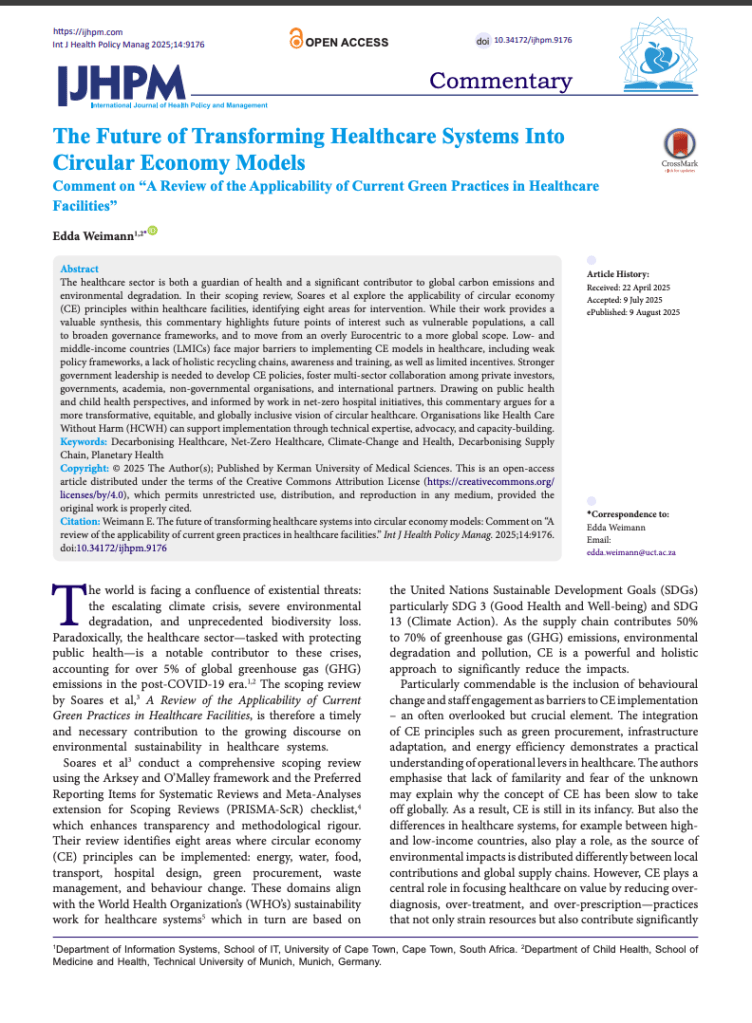
International Journal of Health Policy Management, August 2025
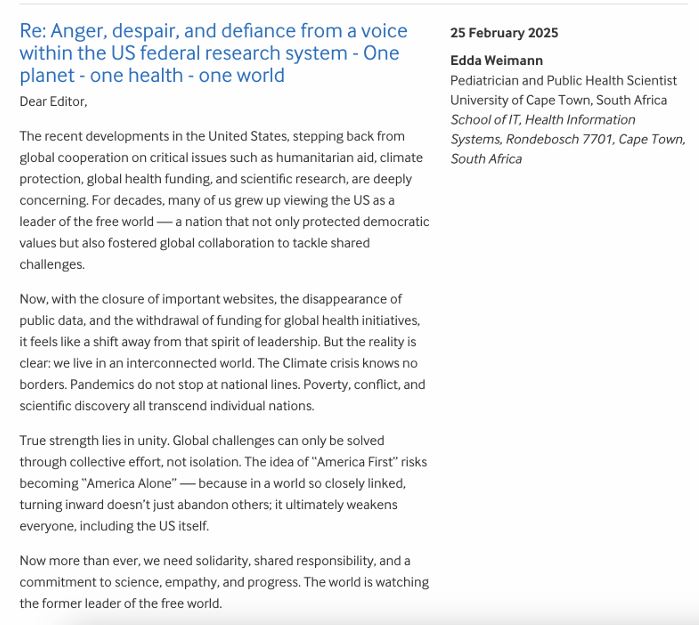
Commentary on BMJ Article February 2025
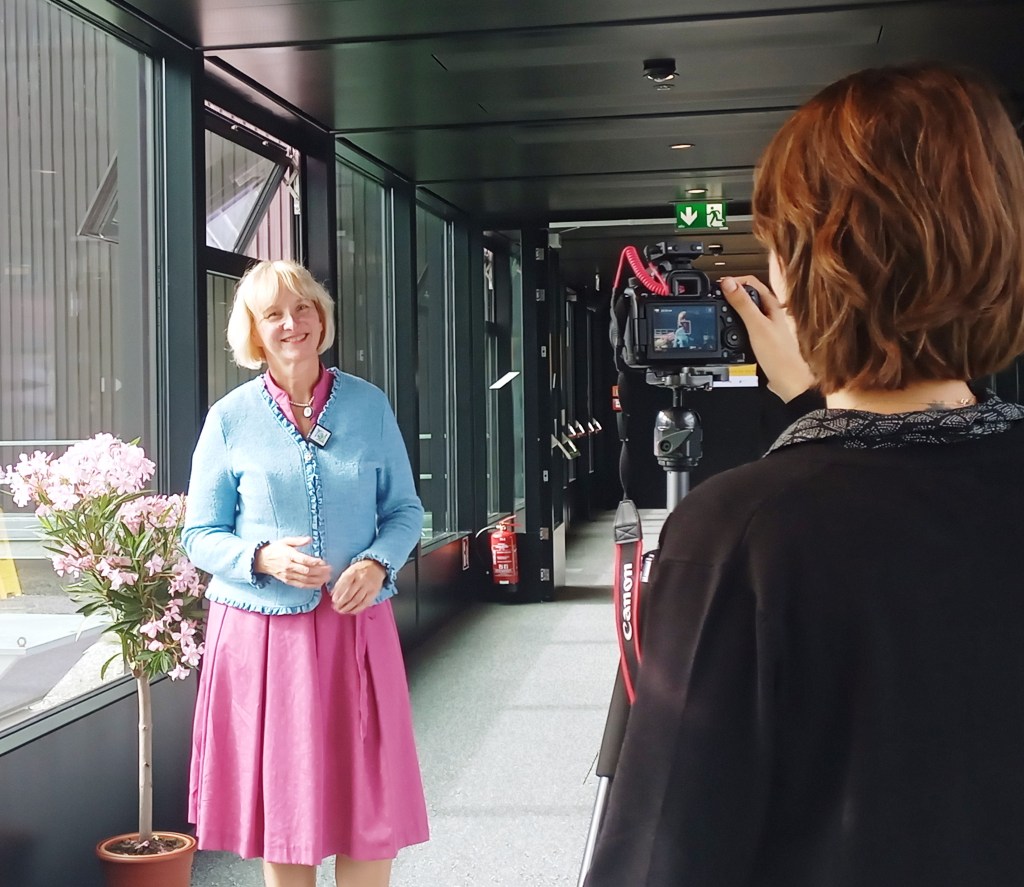
Podcast on planetary health and net zero hospitals
Join me on my podcast as I feature Dr. Edda Weimann as she discusses what is Planetary Health and how it impacts all of us. She also discusses how Rwanda has become a country that is also recognized as a leader in climate action on the global stage! She is a Pediatric Endocrinologist by training and specializes in International Health systems. She is also a Professor of Planetary Health in Munich, Germany. In addition, she serves as a Hospital CEO, she is an author and an Honorary Professor of Digital Health at the University of Cape Town, South Africa.

Climate change impacts on health across the life course
Journal of Global Health May 2024: Climate change impacts on health across the life course — JOGH
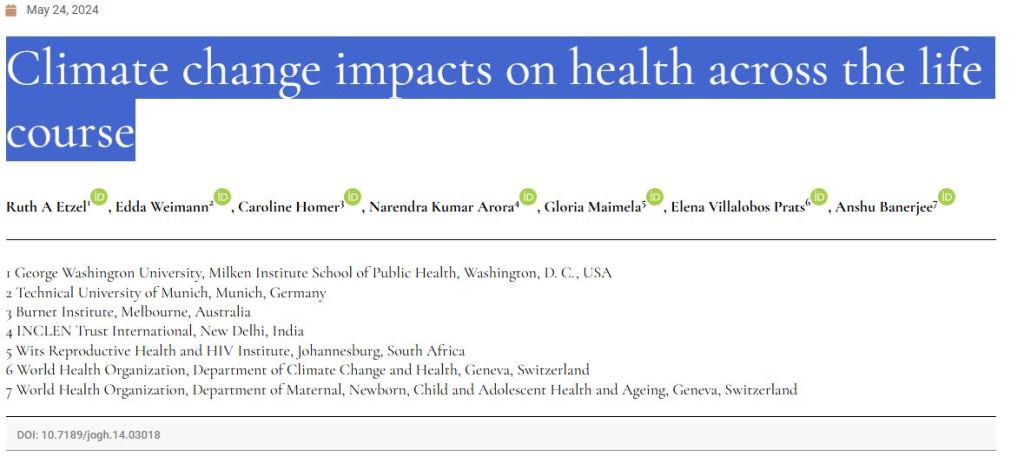
Climate change and global health researchers from the WHO and around the world shed light in the recent issue of J Global Health on how the climate crisis crisis (CC) is affecting different age groups across the life course. We are excited about the publication of several articles on this topic in this series.
Infants and young children are particularly vulnerable to the effects of climate change. Rising temperatures and more frequent extrem weather events increase the risk of malnutrition, waterborne diseases and respiratory illnesses.
Robust public health interventions include strengthening early warning systems for heat waves, improving water and sanitation infrastructure, and ensuring access to nutritious food. Maternal exposure to extreme weather conditions can adversely affect fetal development.
Adolescents are at a unique point in their lives when the effects of climate change can affect both their physical and mental health. Climate-induced displacement, loss of family livelihoods and disruption of education disproportionately affect adolescents. These stressors can lead to increased rates of mental health problems such as anxiety, depression and post-traumatic stress disorder. Including climate change education in school curricula is essential to equip young people with knowledge about climate change and its health impacts. Engaging young people in climate action can drive innovative solutions and build resilience within communities.
Adults, especially those in low-income and marginalised communities, bear a significant burden of climate change. Adults are affected by occupational hazards, especially those working in agriculture and outdoor labour. The economic impacts of climate change can lead to job losses and financial instability, further exacerbating health inequalities.
Social safety nets and economic policies will help communities adapt to climate impacts. Urban planning is also critical to mitigating the impact of extreme weather events.
Elderly people are the most vulnerable age group when it comes to climate-related health impacts. This is also underlined by the recent EU Court ruling that climate change violates human rights. They are more vulnerable to heat-related illness, cardiovascular diseases and respiratory problems due to pre-existing health conditions and reduced physiological resilience. It suggests better ventilated and insulated homes and ensuring access to health care during heatwaves. Fostering community networks can help provide the necessary support and resources to older adults during climate emergencies.
Integrating health and climate policies are needed to address the multiple impacts of climate change on different age groups. The WHO and the researchers call for a multi-sectoral approach that involves governments, health systems, communities and individuals working together to mitigate Climate Change, build resilience and protect our health.
Book publications: “Health risk: Climate change” and “The Future of hospitals”

3 – 2 – 1: It is a pleasure for me to see three chapters published in two books within one month (July 2024).
Weimann E, Weimann LE. International networks and innovation, In Gass G, Neumeyer H, Morell I. (Editor) The hospital of the future, MWV-Berlin (Deutscher Ärzteverlag), Berlin, Germany, 2024
Lavater R., Weimann E. The future of hospitals – global challenges and opportunities (Globale Herausforderungen und Möglichkeiten). In Gass G, Neumeyer H, Morell I. (Editor) Das Krankenhaus der Zukunft. MWV Publishing Company, Berlin, Germany, 2024
One article deals with the health-related challenges of climate change impacts on children as a vulnerable group published with Swiss publishing company Hogrefe (“Health risk: Climate change”); the other two articles discuss global challenges for hospitals and the need for (digital) innovation as well as strategies to reduce emissions and act as climate and health leaders commissioned by the Deutsche Krankenhausgesellschaft (German Hospital Association) in Berlin (“The hospital of the future”). Special thanks to the publishers as well as the publishing companies Hogrefe Verlag und MWV Medizinische Verlagsgesellschaft.
The future of HEAT : Vulnerable population groups on a heating planet – prevention and mitigation
Here is the link to the article
The phenomenon of “boiling frog syndrome” is an instructive metaphor that describes the creeping danger of a gradually increasing threat. A frog sitting in a pot of cold water that is slowly being heated does not recognise the danger and thus dies instead of fleeing. This image is often used as an analogy for the human response to the climate crisis, particularly in relation to the increasing frequency of heatwaves around the world.
Or, as UN expert David Boyd put it in a recent report, “there is something wrong with our brains that we cannot understand how serious this is“, addressing the exploitative global economy that ignores climate-related victims.
Despite drastic warning signs and a rising number of heat related deaths worldwide, the issue of efficient climate and health protection is often ignored in day-to-day politics. This leads to a dangerous ignorance that leaves society unprepared for the increasing climatic extremes.
The number of heat-related deaths is rising at an alarming rate. Examples such as the recent incidents at the Haji pilgrimage, where hundreds of pilgrims died from the extreme heat illustrate the urgency of the problem. These events are not isolated incidents, but part of a global trend of severe global warming.
It is vital that policymakers and governments recognise the problem and promote preventative measures at all levels. This includes developing heat action plans, allocating sufficient resources to health infrastructure, educating the public about risks and protective measures, and drastically reducing fossil fuel consumption and exploitation. Urban planners and local authorities can also contribute by creating heat-resilient infrastructure, such as shaded green spaces and cooling architecture.
After all, everyone has a role to play. We can no longer afford to ignore the climate crisis and its impact on public health. It is time for drastic and bold global, national (“German activists take government to court over climate policy”) and local action to go hand in hand to prevent climate hell that is already underway, or as António Guterres nailed it: “The era of global boiling has arrived. We are on the highway to climate hell. We are in the fight of our lives, and we are losing.” We need to stop the loss of life now.
In “Vulnerable populations in an increasingly hot world – prevention and mitigation” I highlight what can be done at individual level to minimise risks and protect public health.
Heat waves – mitigation and adaptation for the health care system
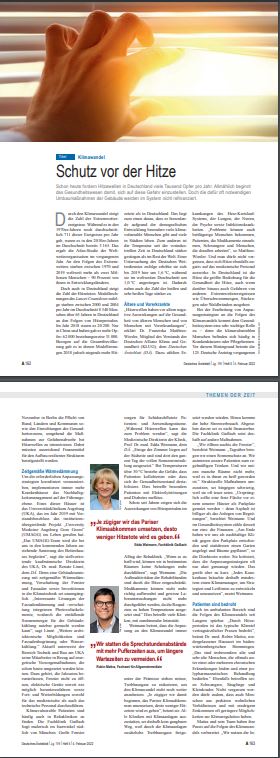
The article on heat caused by climate change is published in the German Medical Journal (Deutsches Ärzteblatt). It highlights the impact of heat and heat waves on health care in Germany. Over the last 40 years, extreme weather events have increased 4.5-fold. 2 million people died as a result of climate change during this period. The increase in heat waves makes the German population, especially children and the elderly, very vulnerable. Heat adaptation plans are needed, but adaptation is not the cure. We need to prevent climate change from getting any worse. That is why we must urgently implement the Paris Agreement in line with zero-emission healthcare in Germany and worldwide. Since the Paris Agreement came into force, we are already six years behind schedule.
The missing speed limit on German highways and its implication on our health and the climate crisis
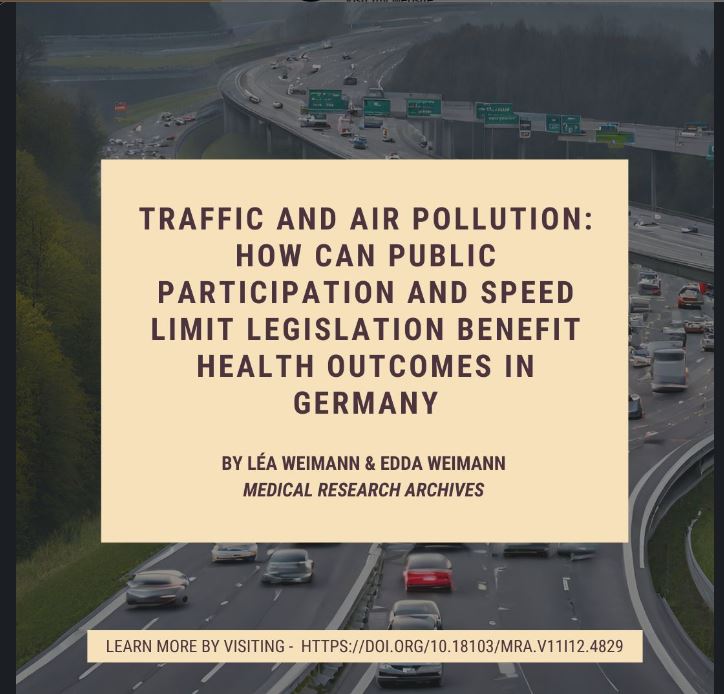
A key aspect are the evidence-based recommendations as a way forward in the German speed limit debate (article). Evidence reveals that public opinion in Germany favours a speed limit. Beyond the ecological gains, we underscore the underappreciated health co-benefits intrinsic to speed reduction—a dimension pivotal in shaping the discourse on comprehensive societal well-being. Progressive action, guided by informed democratic participation, is the cornerstone of sustainable change. We urge Germany to overcome inertia and propose concrete legislative measures that are in line with the aspirations of its citizens and the imperatives of global sustainability. Given the magnitude of the climate emergency, the adoption of pragmatic interventions, including a speed limit, assumes the character of a paramount step forward in Germany’s commitment to a greener and healthier future.
In Germany, over 14.3 million people live within less than 2 km of motorways, with significant impacts on noise and air pollution. Exhaust fumes contain carcinogenic compounds that increase the risk of lung cancer and other cancers.
Children’s health also suffers from traffic-related air pollution with effects on behaviour and child development. It is also associated with lung disease and an increased risk of leukaemia. Over 30 per cent of road deaths are caused by excessive speed.
Although speed limits reduce pollutant emissions from diesel and petrol engines, Germany is the only country in the world without a general speed limit on motorways. A majority of the German population supports the speed limit, and the Bavarian Medical Association has also spoken out in favour of it. Although speed limits protect the freedom and health of the population, no general speed limit has yet been introduced. Of course, this is also because it jeopardises the business model of the German automotive industry.
You can still do something: support the call for a voluntary speed limit from Health for future, avoid driving, don’t walk along busy roads and switch off the engine whenever possible .
Re-imagine our car dominated world and cities and instead pace the citizens in the centre and their health by creating car free Sunday mornings where people can use major roads and engage in a mass sports events and have fun. It is up to us to make this possible. Research shows that pedestrian zones and reduction of traffic reduces air pollution by 50%.





The Rwandan government has been at the forefront of implementing innovative measures to enhance both environmental sustainability and public health. Recognizing the severe impact of plastic pollution, Rwanda was among the first countries in the world to ban plastic bags in 2008, a move that significantly reduced environmental degradation and promoted the use of eco-friendly alternatives. This bold step was part of a broader strategy to foster a cleaner, greener country.
To further engage its citizens in environmental stewardship, the government introduced a monthly initiative known as Umuganda, or community cleanup day. On the last Saturday of each month, Rwandans across the country participate in local clean-up activities, fostering a sense of communal responsibility and unity while improving the cleanliness and aesthetics of their neighborhoods.
Additionally, Rwanda has instituted Car-Free Sundays every fortnight, dedicating Sunday mornings to mass sports and health education. This initiative encourages physical activity, reduces vehicular emissions, and promotes a healthier lifestyle among its citizens. These events transform city streets into safe havens for walking, running, and cycling, creating a vibrant and health-conscious community atmosphere.
In a groundbreaking move to enhance healthcare delivery while minimizing environmental impact, Rwanda has adopted drone technology for delivering medical supplies to rural health facilities. This innovative approach not only speeds up the delivery of essential medicines and supplies but also reduces the carbon footprint associated with traditional transportation methods. By leveraging drones, Rwanda is able to provide timely medical care to remote areas, thereby improving health outcomes and reducing emissions simultaneously.
Together, these measures illustrate Rwanda’s commitment to sustainability and public health, setting a global example of how proactive governance and community involvement can drive positive change.
The German National Television (BR) explores in an interview the implications of the climate crisis and our boiling planet on our health, on hospitals, patients and staff

Health at the mercy of fossil fuels
UN Secretary-General Guterres said at a press conference, most recently on 15 June. June 2023: “The era of global boiling has arrived. … We are on the highway to climate hell. We are in the fight of our lives and we are losing.”
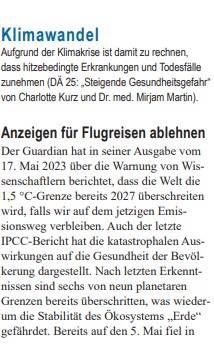
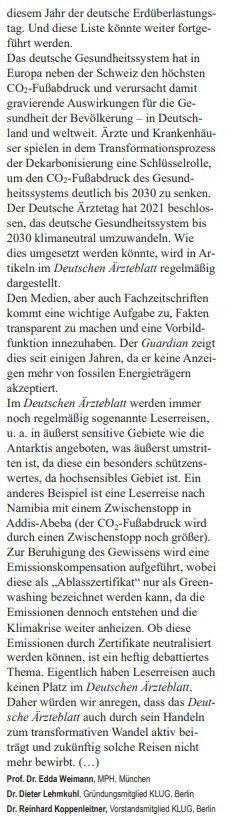
Our failure to move rapidly towards a net-zero economy to ensure our survival makes me think of a cancer patient refusing treatment. The same applies to how we continue to use fossil fuels. In order to lead the transformation process, we as health professionals must play a leading role. That’s why we’re calling on the German Medical Associations science journal (Deutsches Ärzteblatt) to stop promoting and allowing fossil fuel advertising, much like the Guardian did so many years ago.
We are at a crossroads, for better or worse: the choice is still ours, but as the Lancet Countdown has pointed out: Health at the mercy of fossil fuels. The window of opportunity is closing fast.
Wir sind aufgefordert, auch von UN Generalsekretär Antonio Guterres, nicht länger Werbung für fossile Energieträger zu machen. Dies betrifft auch das Deutsche Ärzteblatt
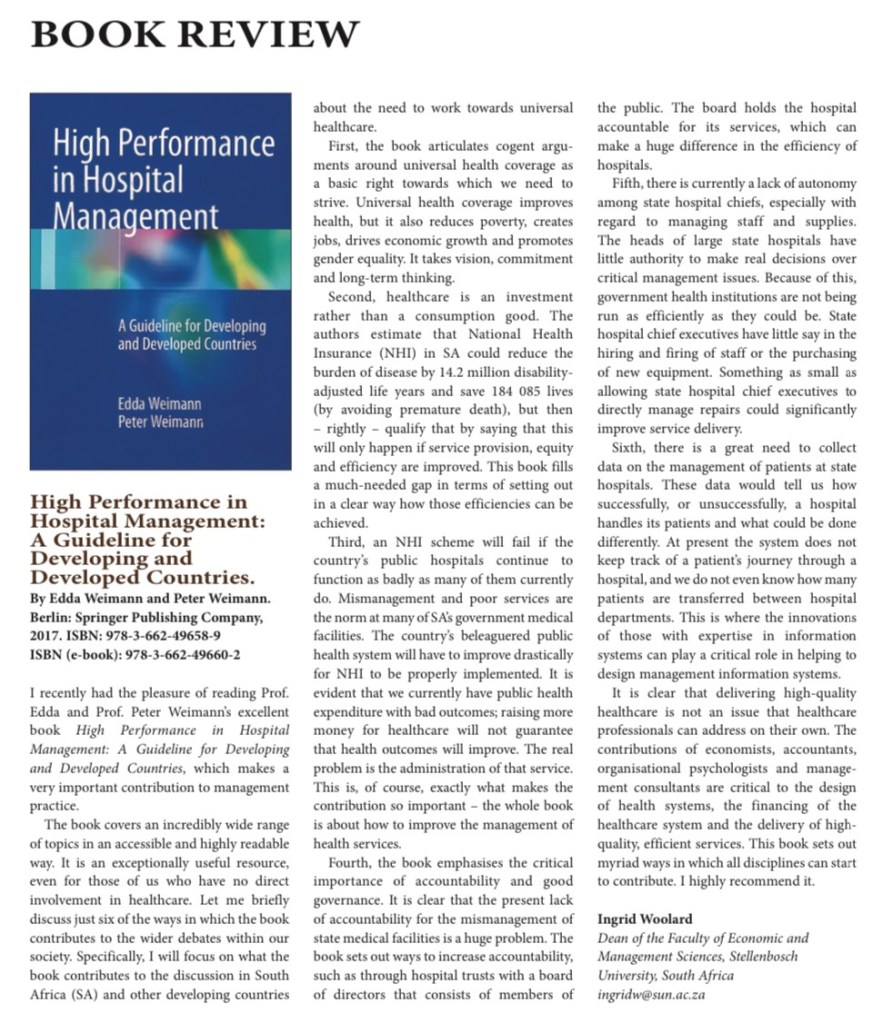
High performance in Hospital Management – Springer Book
The Planetary Health Diet
Spitta Publishing Company 14th August 2023
A healthy and climate-friendly diet
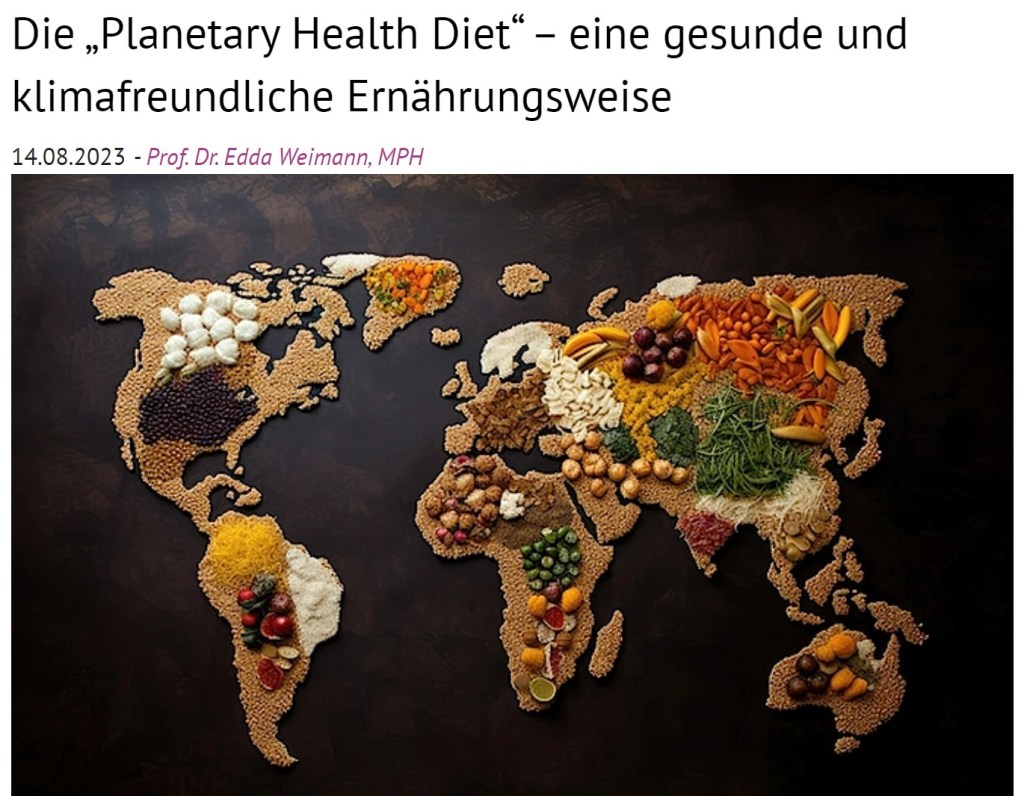
The Planetary Health Diet is a scientifically based diet that protects both human health and the health of the planet. In the following, the Planetary Health Diet is presented as a climate-friendly diet that can be taken into account in nutritional counselling. The climate argument can support the motivation of patients to eat healthier during counselling. Our diet and the climate are closely linked. In order to combat the climate crisis and avoid a climate breakdown, it is essential to change the agricultural and food industry and to change diets. Especially as our diet is very unhealthy due to the high proportion of processed foods and meat and contributes to premature mortality.
Eating habits should therefore be changed and more sustainable alternatives chosen. One of these alternatives is the “Planetary Health Diet” developed by the University of Oxford and published by the EAT-Lancet Commission in the medical journal “The Lancet”. The EAT-Lancet Commission is an association of international scientists under the patronage of the Norwegian doctor Gunhild Stordalen and the Lancet with the participation of the Wellcome Trust and the Stockholm Resilience Centre
Sustainability and governance structures – a comparison of the NHS (UK) with the German health care system
Link to the article
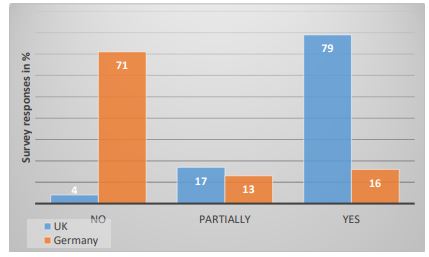
One of the many results: The Difference between the UK (NHS) and the German health care system in terms of job descriptions – In Germany, sustainability is still rarely included in the job description of healthcare professionals.
On the road to a net-zero health system, Monatsschrift Kinderheilkunde January 2023
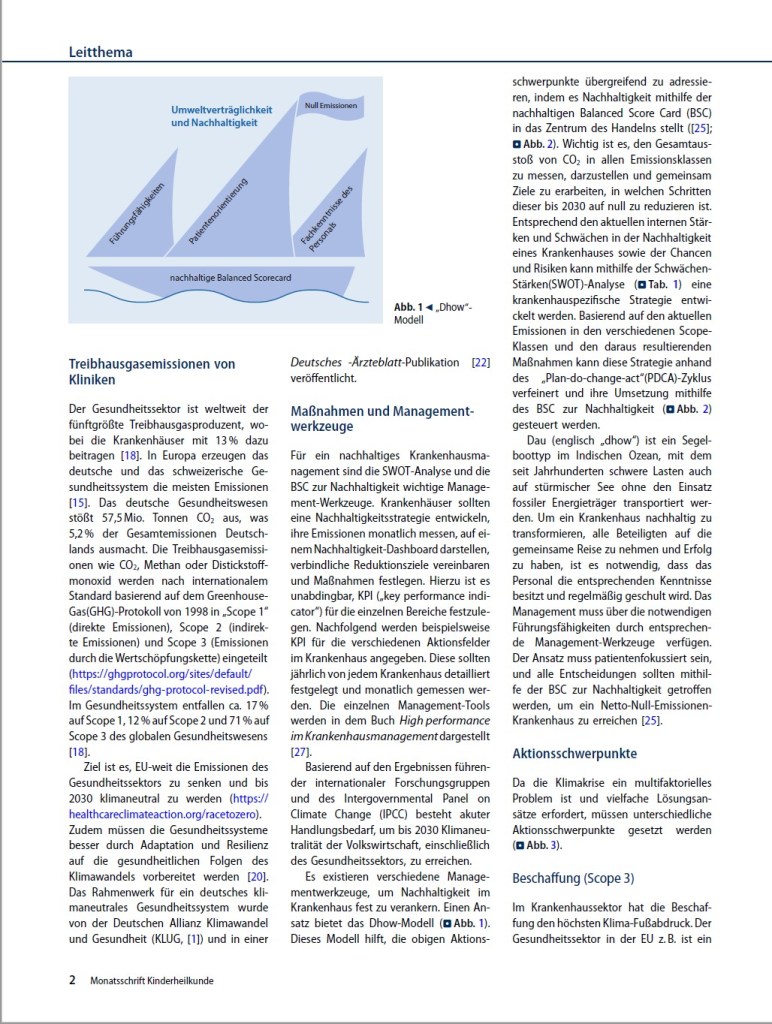
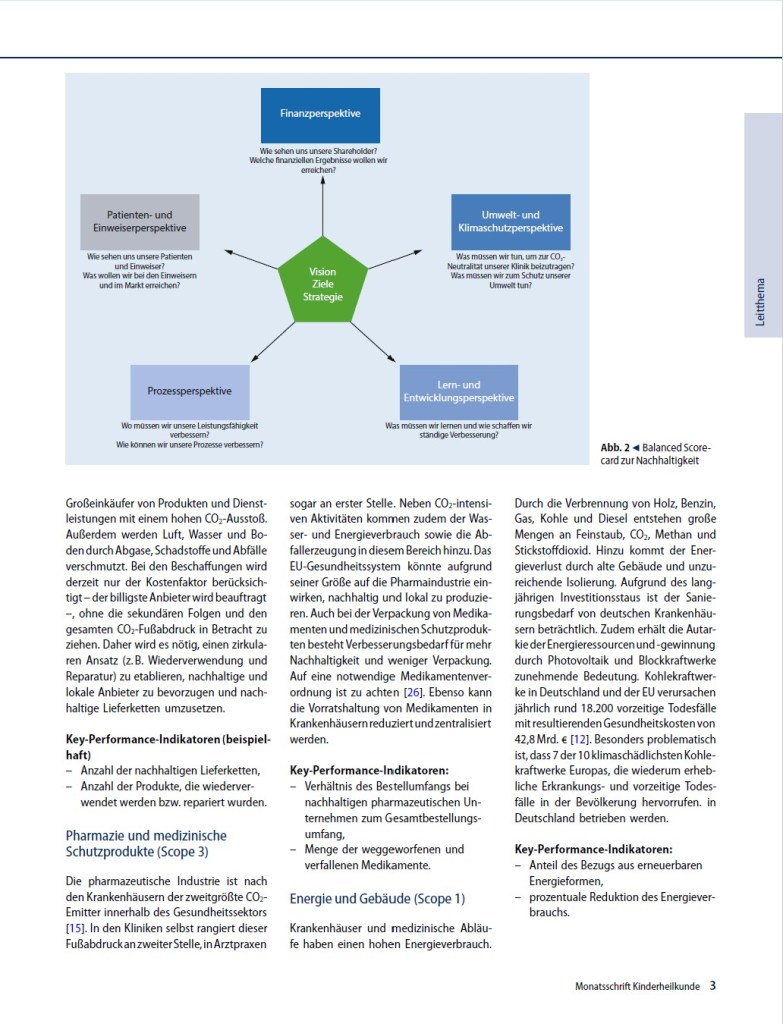
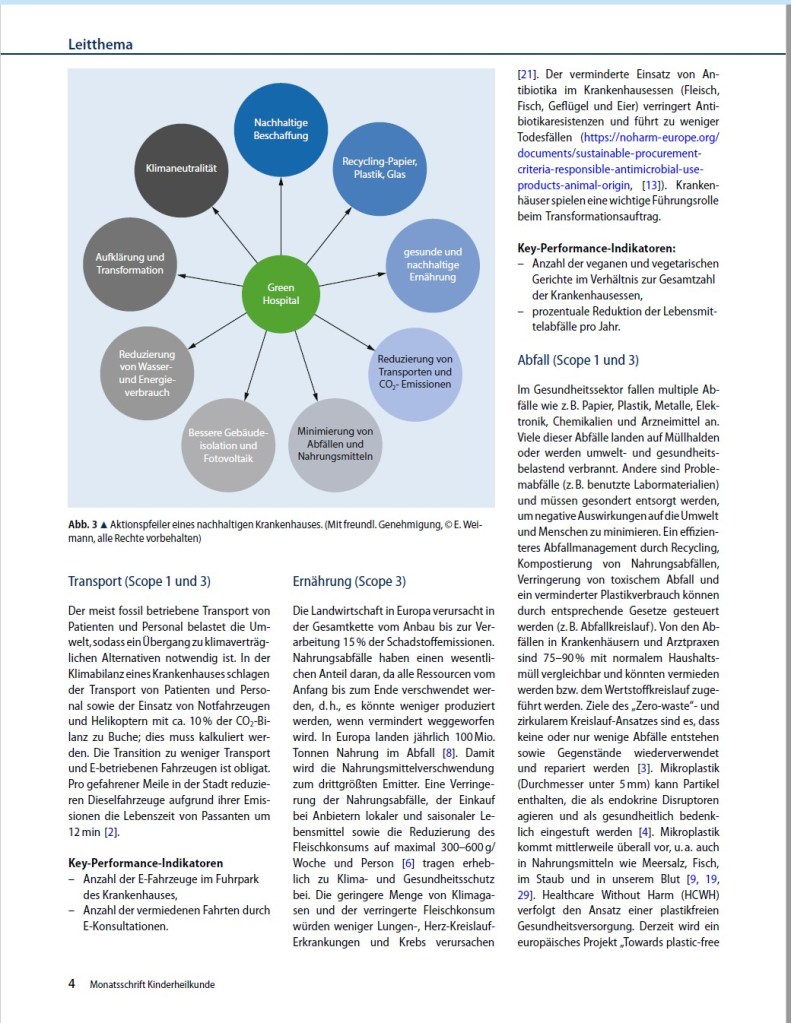
Here the link to the article
Implementing zero-emission hospitals, ESMED January 2023
Link to the article
The obesity Pandemic – impact and solutions
The link to the television documentary.

Tackling the climate targets set by the Paris Agreement (COP 21):
Green leadership empowers public hospitals to overcome obstacles and challenges in a resource-constrained environment
A documentary and interview on the national television, BR 17th May 2022
From the Editor (SAMJ): Climate change – no denial

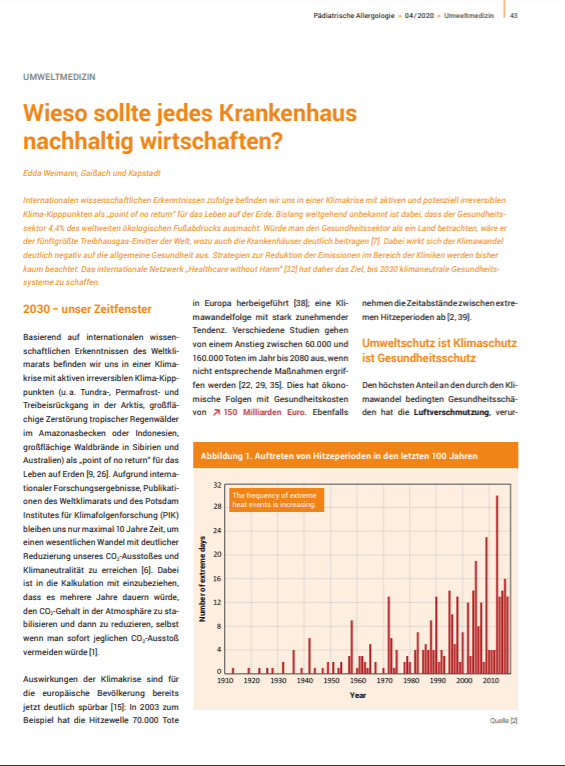
Why all hospitals should be managed in a sustainable way,
Pädiatrische Allergologie 4.2020
YouTube documentary on Green hospital
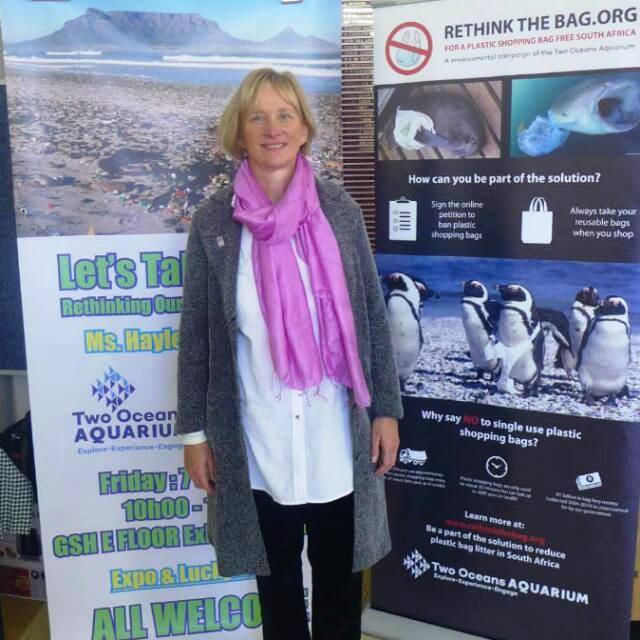
Green Fair at Groote Schuur Hospital (GSH) September 2018
Together with a public health colleague from UCT, we initiated the first Green Fair at Groote Schuur Hospital, bringing together various stakeholders. Lectures and exhibition took place in parallel. Some of the talks were about plastic pollution, climate change, the divestment from fossil fuels, and the much needed ban on plastic bags in South Africa. GSH staff showcased their exciting green projects. Green vendors were able to engage the public and hospital staff in a greener and more sustainable lifestyle. A day of fun and raising awareness of pressing environmental and climate issues.

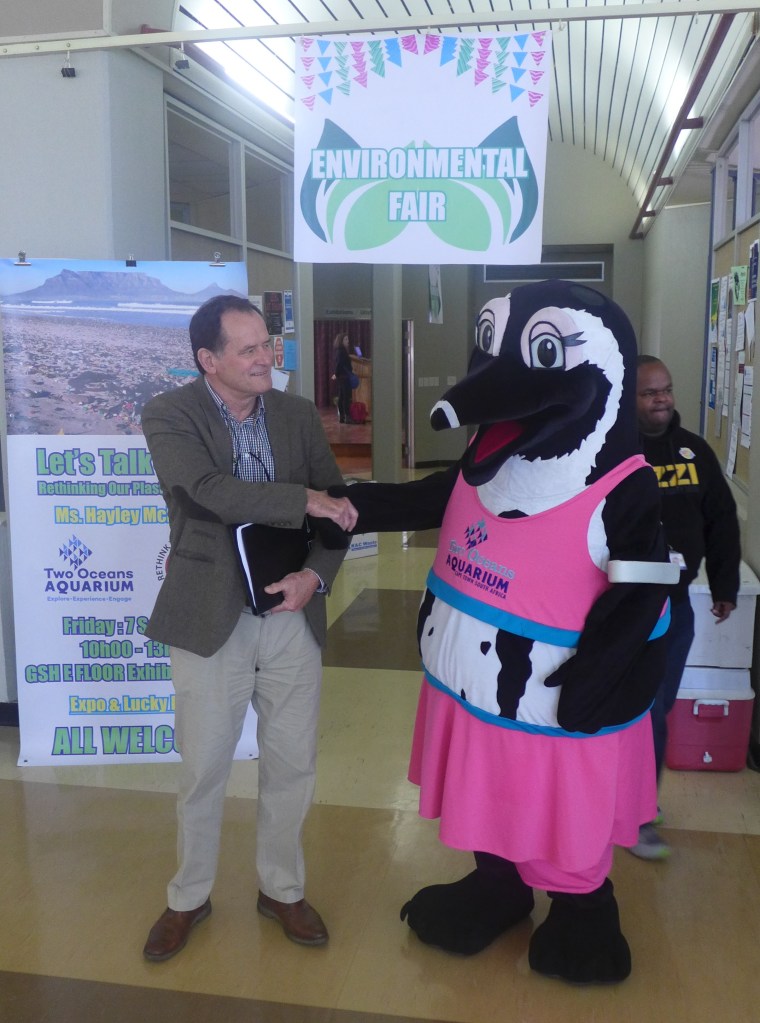
Link
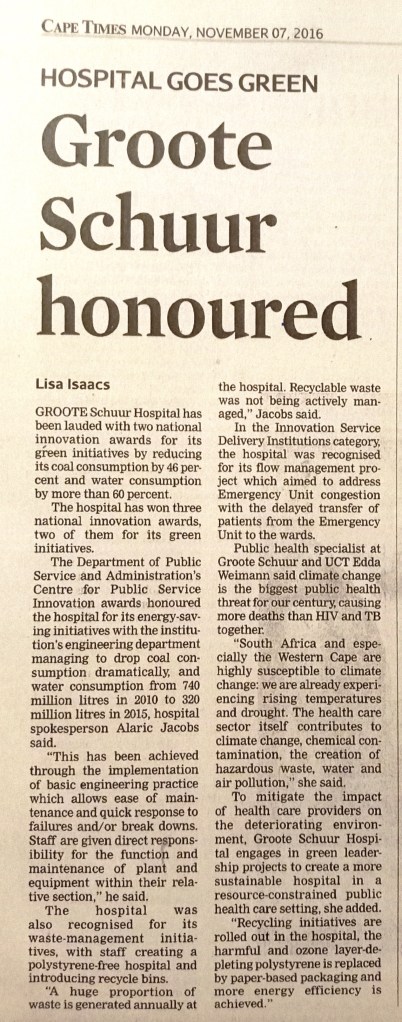

Planetary Health
Textbook MWV (Berlin) 2021 Impact of climate change on infants, children and adolescents
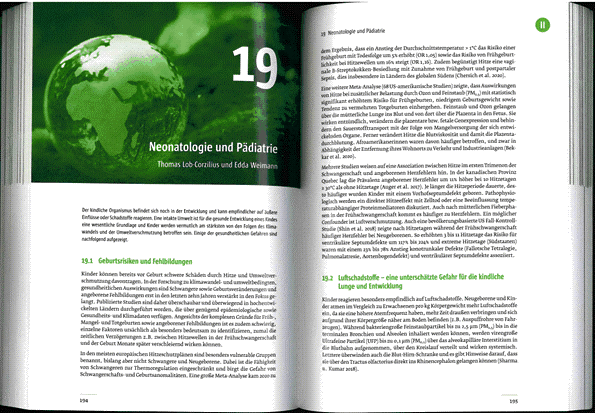
Green hospitals – on the way to net zero emissions health care system, Springer Publishing Company January 2022
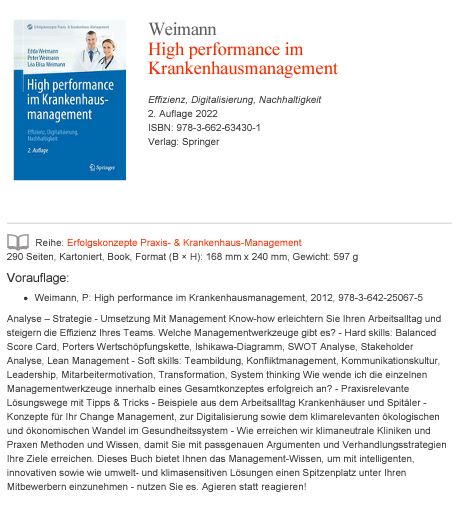
Air pollution and Child Health
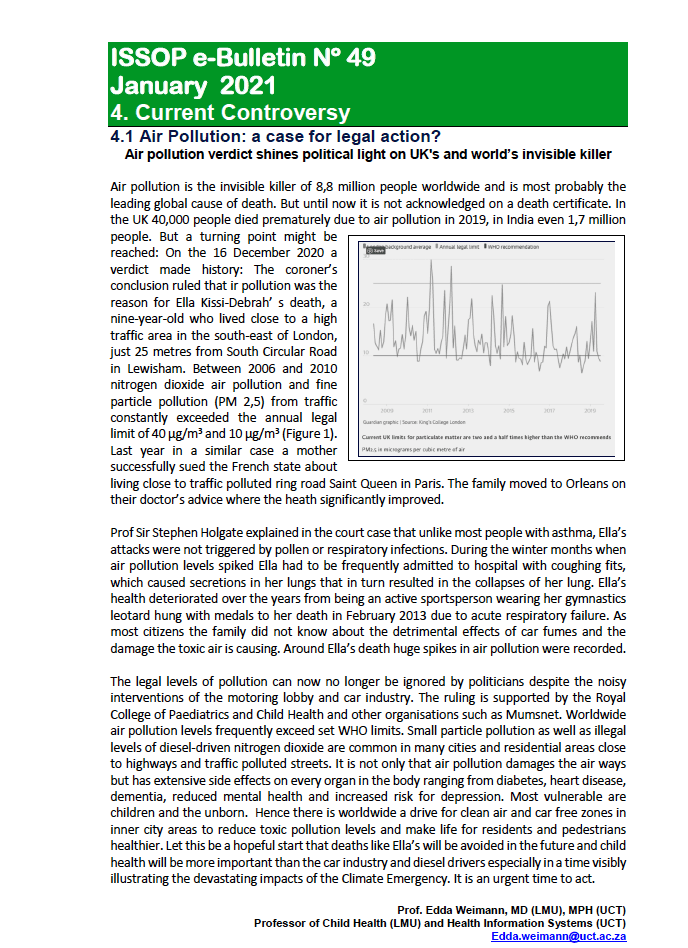
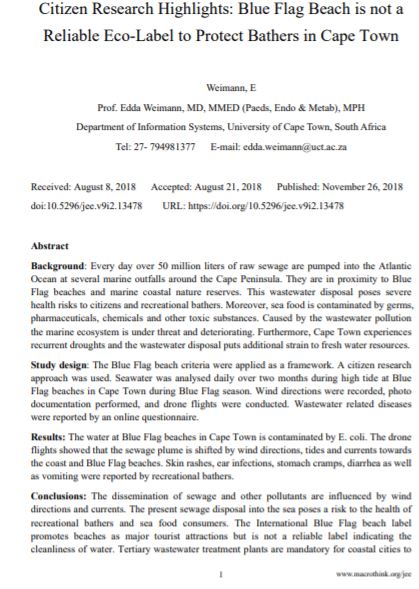
Blue flag beaches, water pollution and wastewater induced diseases
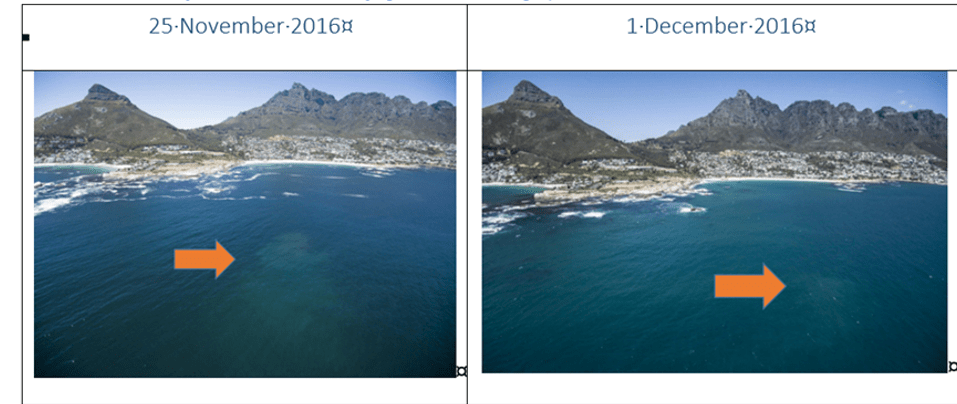
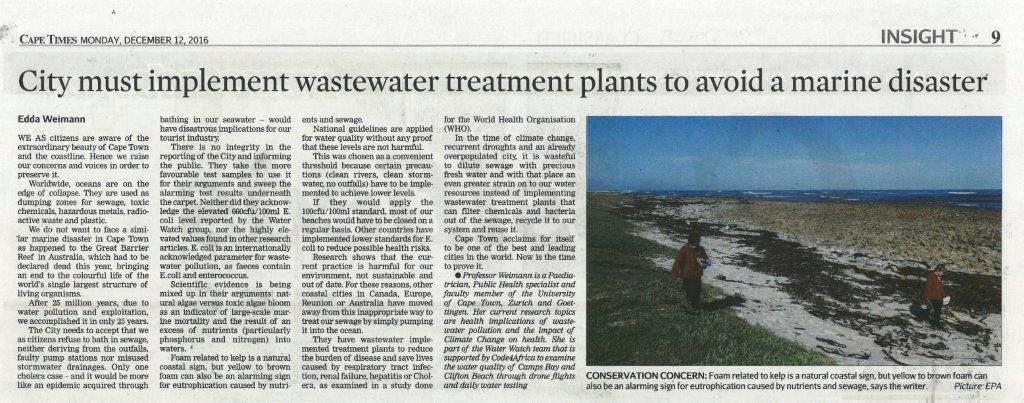
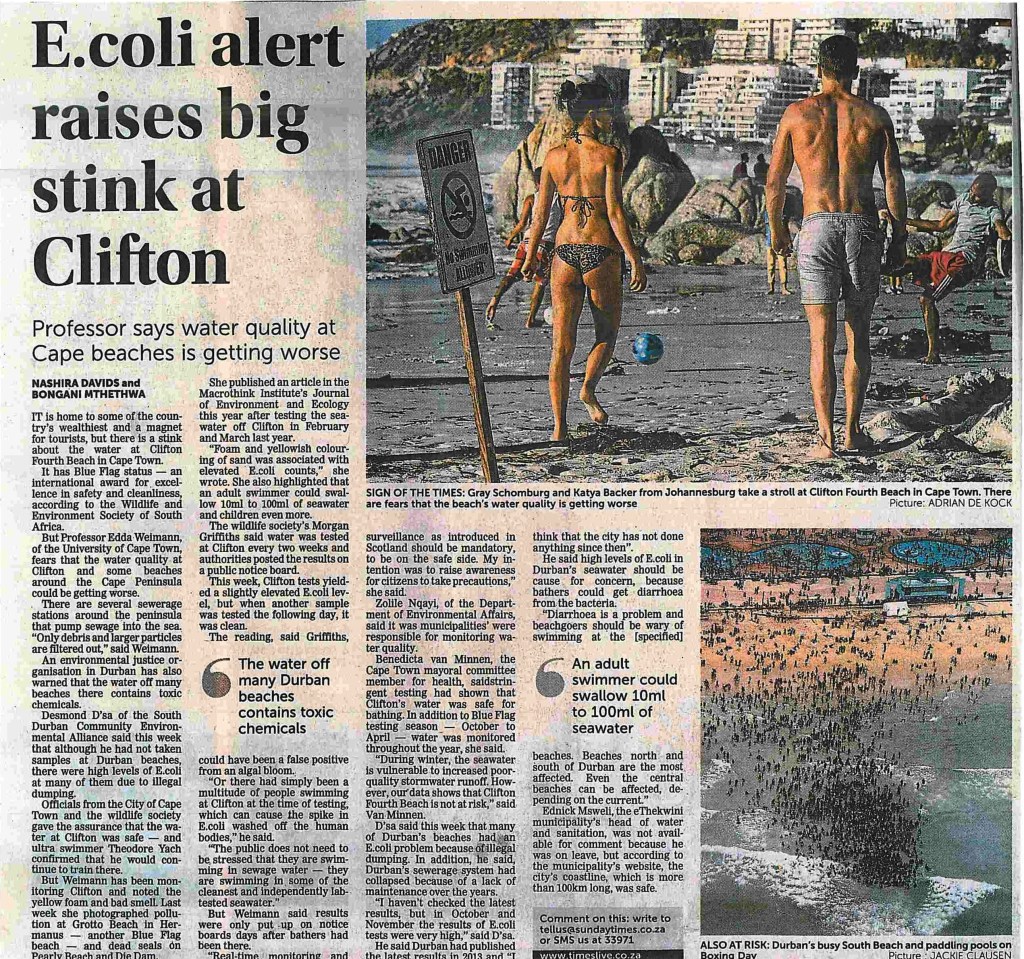
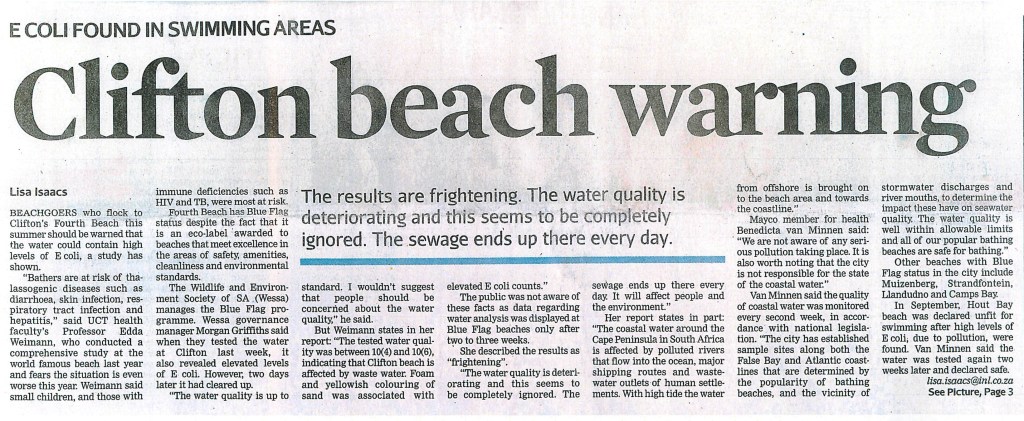
Most coastal cities still dump their waste water often untreated into our oceans. In addition, wastewater polluted rivers end up in the sea. This practice causes massive toxic pollution of the marine environment leading to E. coli poisoning of sea food and mammals as well as high levels of hazardous metals and chemicals (e,g, in Tuna). Besides, it leads to thallassogenic diseases of recreational bathers, surfers, swimmers and beach goers as the sand gets polluted too, Waste water treatment and drastic reduction of the plastic influx is mandatory.
These two research papers highlight the implication for the famous blue flag beaches Clifton and Camps Bay in Cape Town. The Blue Flag is not a reliable eco-label for bathers.

Citizen research project on wastewater pollution and health
Article Cape Times 12 December 2016
Sunday Times 24th December 2014
Article Cape Argus 26 December 2014
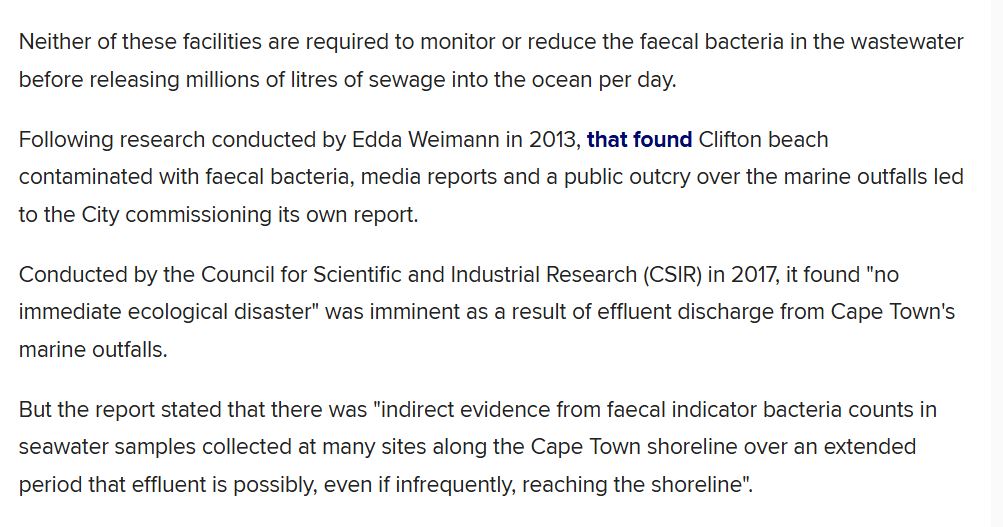
When you consider the amount of international publications as well as the Lancet publication of the alarming antibiotic resistance as well as E. coli resistance and the increase of AMR on beaches worldwide, it is of great concern that the wastewater practice in Cape Town and South Africa is still ongoing.
News24 – Half of South Africa´s Sewage treatment plants are failing
Reasons for recurrent Table mountain Fires
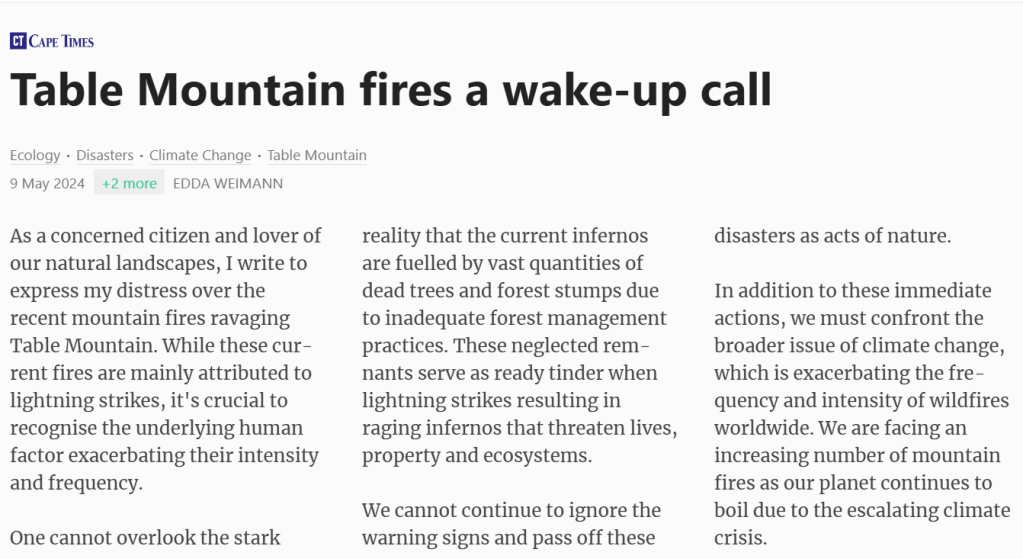
Letter to the Editor: As a concerned citizen and lover of our natural landscapes, I write to express my distress over the recent mountain fires ravaging Table Mountain. While these current fires are mainly attributed to lightning strikes, it’s crucial to recognize the underlying human factor exacerbating their intensity and frequency.
One cannot overlook the stark reality that the current infernos are fuelled by vast quantities of dead trees and forest stumps due to inadequate forest management practices. These neglected remnants serve as ready tinder in case of lightning strikes into raging infernos that threaten lives, property, and ecosystems.
The failure to properly manage our forests has consequences that extend far beyond the immediate devastation witnessed during these wildfires. It represents a systemic disregard for our environment and a betrayal of our responsibility as stewards of the land. We cannot continue to ignore the warning signs and pass off these disasters as acts of nature.
It’s imperative that we address this root cause by investing in comprehensive forest management strategies. This includes proactive measures such as clearing of dead wood, and implementing sustainable forestry practices. Additionally, greater resources and support must be allocated to firefighting efforts to ensure the safety of both residents and firefighters tasked with battling these blazes.
Furthermore, community awareness and involvement are essential components of any successful fire prevention and management strategy. Educating the public about the importance of responsible land management and the role each individual plays in preventing wildfires is vital for long-term success.
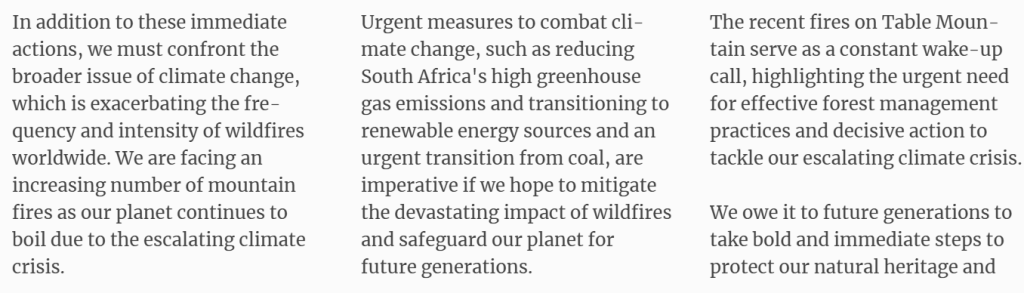
In addition to these immediate actions, we must confront the broader issue of climate change, which is exacerbating the frequency and intensity of wildfires worldwide. We are facing an increasing number of mountain fires as our planet continues to boil due to escalating climate crisis. Urgent measures to combat climate change, such as reducing South Africa´s high greenhouse gas emissions and transitioning to renewable energy sources in South Africa and an urgent transition from coal, are imperative if we hope to mitigate the devastating impacts of wildfires and safeguard our planet for future generations.
The current mountain fires on Table Mountain serve as another wake-up call, highlighting the imminent need for effective forest management practices and decisive action to combat our escalating climate crisis. We owe it to future generations to take bold and immediate steps to protect our natural heritage and address the root causes of these catastrophic events.
Climate and Health
World Nursing Conference 2021
Talk: Why hospitals and health care providers such as nurses and doctors urgently need to act on Climate Change to avoid that the climate crises further accelerates and will lead to an imminent climate breakdown.
New economic models that incorporate our planetary boundaries
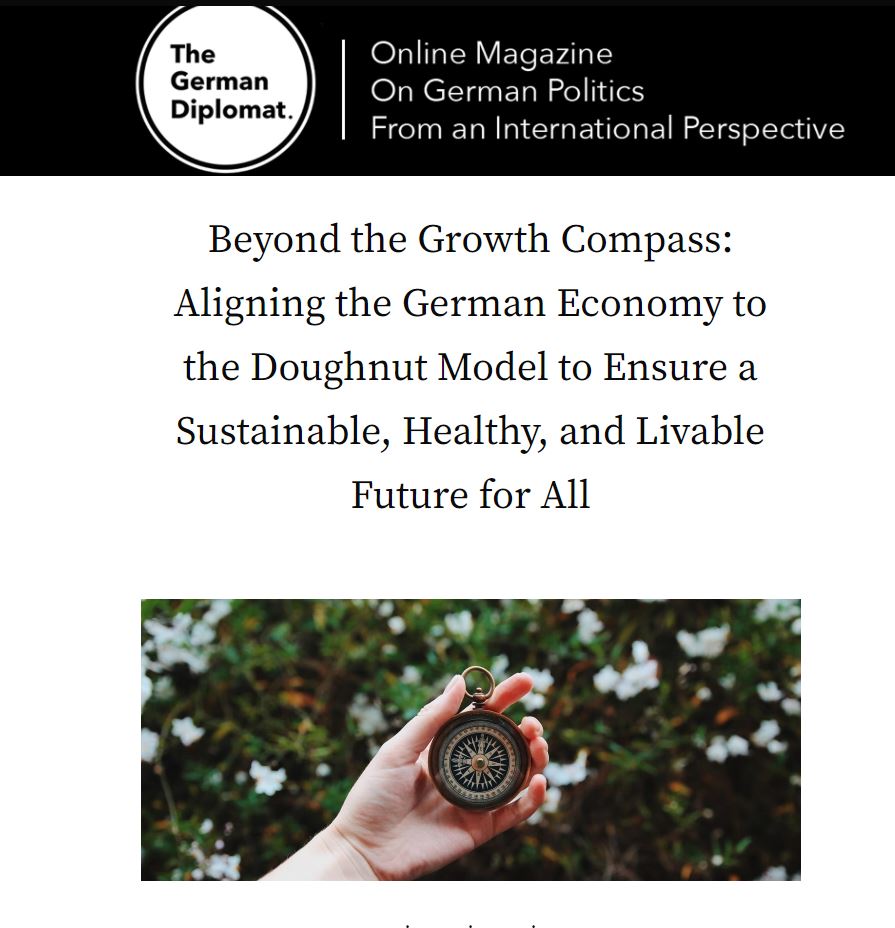
The Doughnut Modell
The teaching and application of economic models such as Keynes do not offer solutions for the current economic and environmental crises that are intertwined. Kate Raworth has developed at the University in Oxford the Doughnut Model – a new economic approach to find sustainable solutions for our planetary crisis. In our article we describe how the Doughnut model could be applied to the German economy.
Sustainability and Leadership Awards
National Innovation Award (Public Services), Green hospital, Johannesburg, South Africa 2016
Pan African Innovation Award, Green Hospital, El Jadidia, Morocco 2017
Excellence Award Groote Schuur Hospital, Green hospital, Cape Town 2019
Golden Climate Champion, Health Care Challenge, Health Care Without Harm, Brussels 2020
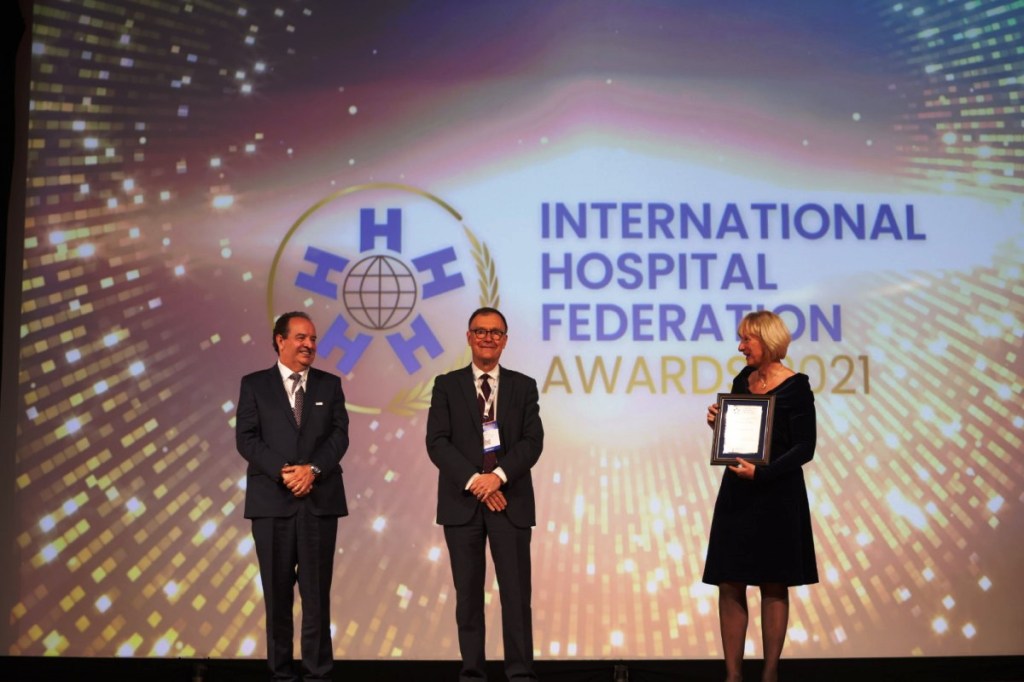
International Hospital Federation, Bronze Award, Ashikaga-Nikken Excellence Award for Green Hospitals, Barcelona 2021
Public service awards for green hospitals 2016


Pan African Award for green hospitals Morocco 2017


International hospital award for green hospitals 2019

 Climate action means health protection