

Topics
- Health and Climate Change
- Transformation and Change-Management of health care delivery
- Green hospitals and sustainable hospital management
- Planetary Health
- Digital Planetary Health, Green IT
- System thinking, Health Systems
Topics (selection)
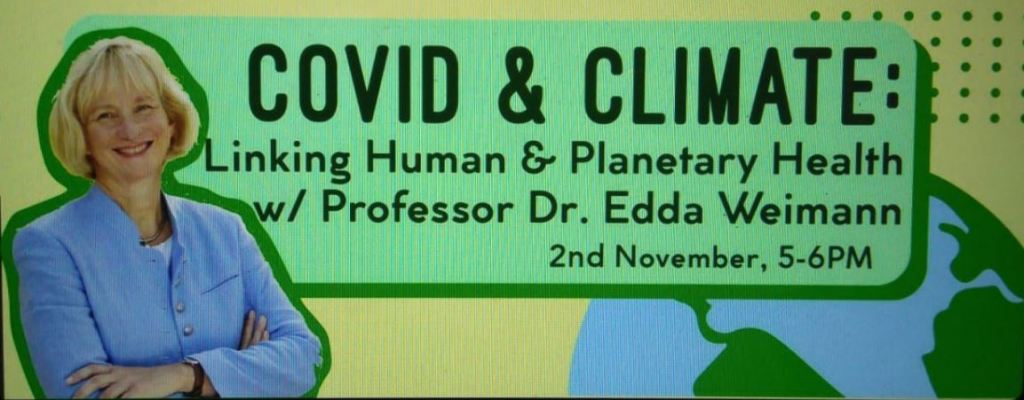
Green Week, University of St. Andrews, Scotland, October 2020
COVID 19, the Climate Crisis and the impact on our health. What are the links? What do we need to do?
First Climate and Health Summit (organisation and scientific lead), Gaissach/Aschau, 16 – 17 October 2020
How the Climate Crisis changes disease patterns and interventions in child health
Hipp Symposium, 20 April 2021
Planetary health diet – Health child nutrition in the time of climate crisis
International Society for Social Paediatrics (ISSOP), 24 June 2021
Climate change and child health
H4F Regensburg, 29 April 2021
Climate change and nutrition – how can we transform the current system
2nd International Conference on the Future of Nursing and Nursing Education (Webinar), 11 August 2021
Why health care systems urgently need to act on climate change
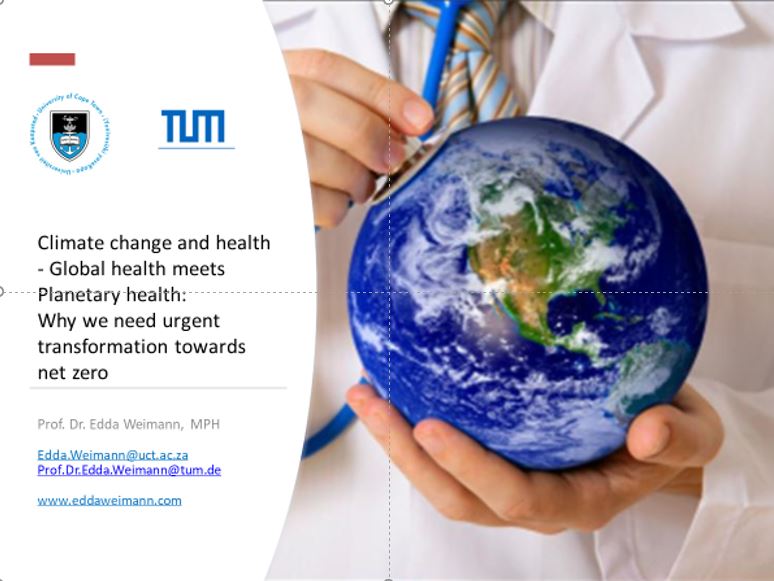
Future of Health, International Conference, TU Munich, 13 – 17 September 2021, Workshop 13 September 2021
Green spaces, Climate change and health: What Covid should teach us?
16. German National Conference for Allergology, 30 September – 2 Oktober 2021
Actions in the climate crisis: Going green in hospitals
Second Gaissacher Climate & Health Days (Webinar), 22-23 October 2022 (organisation & scientific lead)
Impact of Climate Change on child health: How to create mitigation, adaption and resilience
Measures of net-zero hospitals (Planetary Health Diet, outdoor activities, gardening, renewable energy, procurement, education, staff involvement, etc.)
Planetary Health, Lecture series, University of Marburg, November 2022
Green hospitals – how to achieve organisational change
ENBEL/CHANGE, online, 26 January 2022
Air pollution and wild fires in Africa – impact on health
Climate and Health Summit, 22 – 23 October 2021
Climate Change and Child Health, COVID-19 and Child obesity
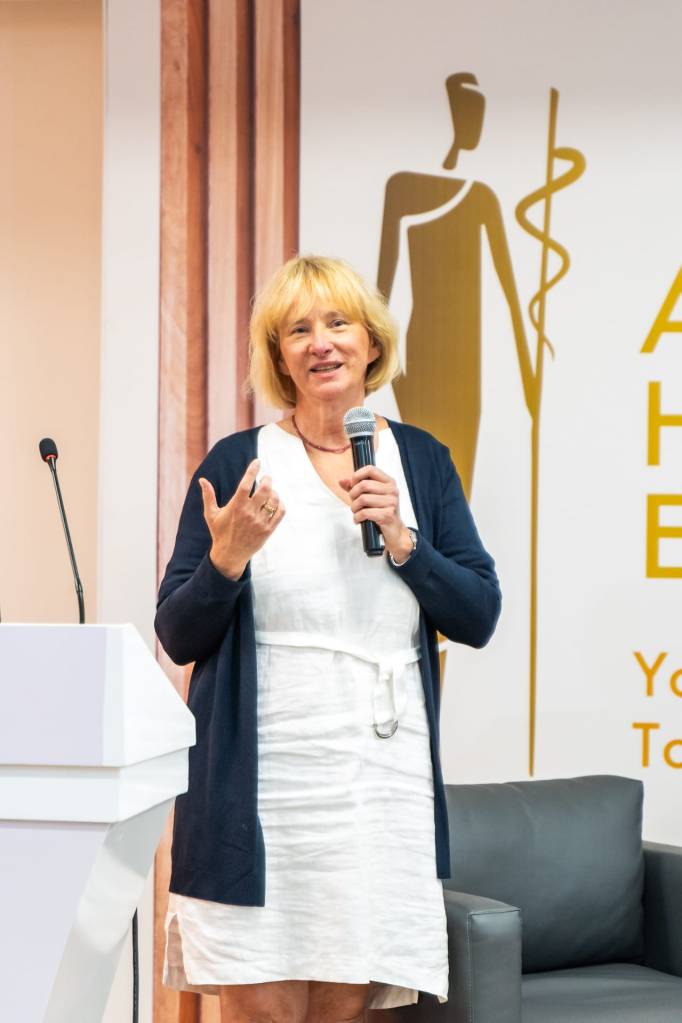
African Health Excon, Cairo, June 2022
Climate change and health
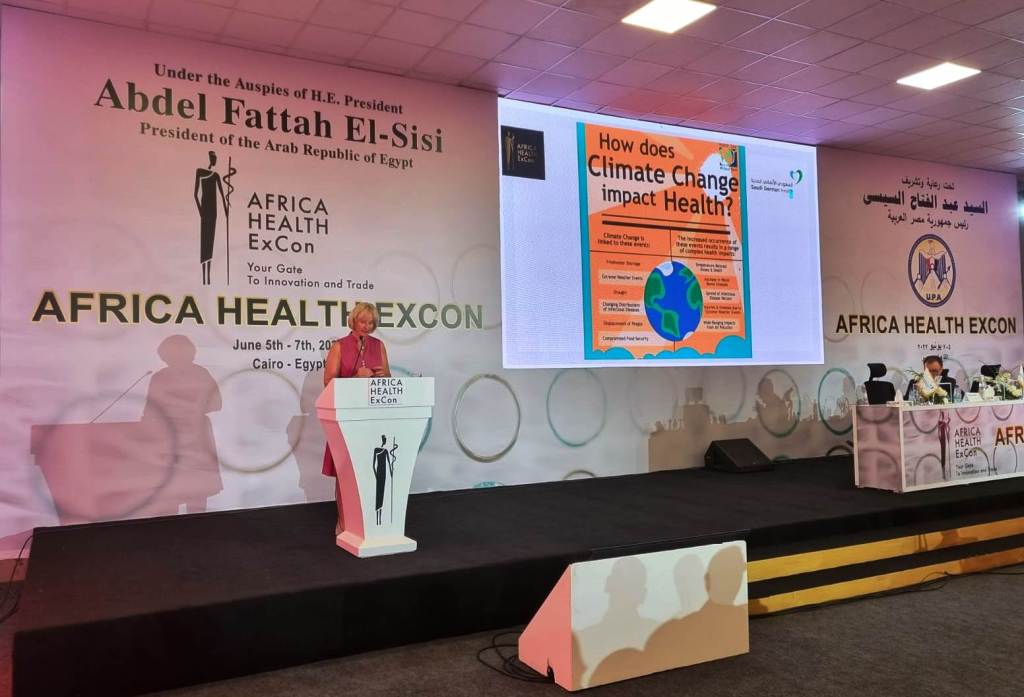
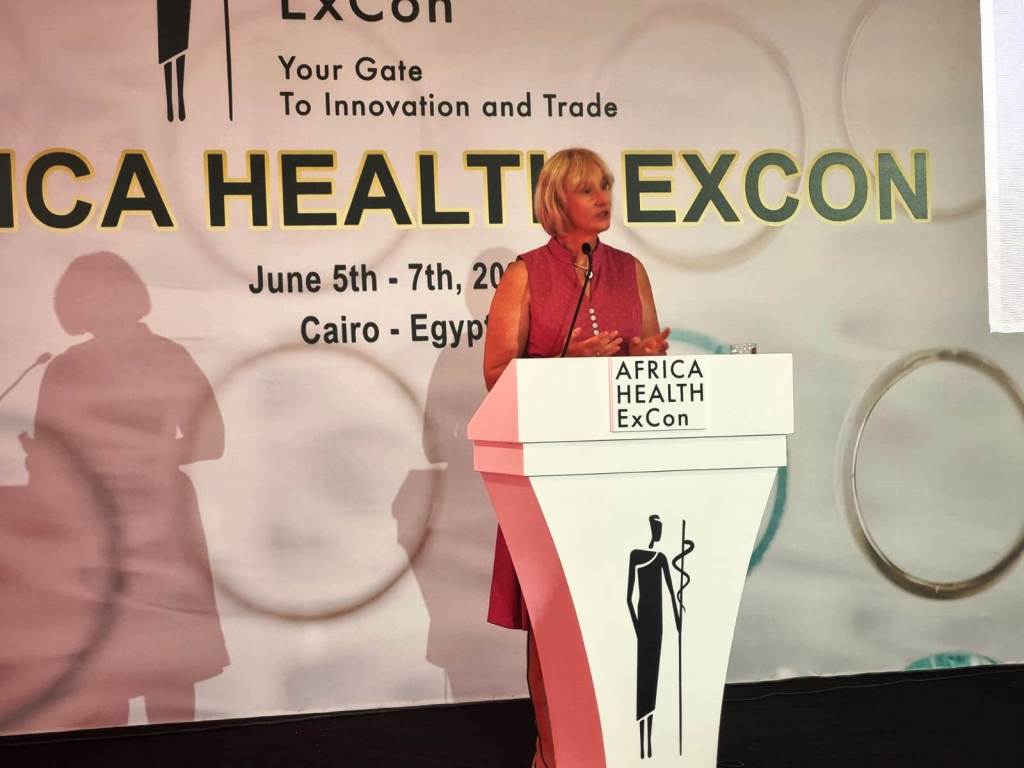
Feed-back: “Dear Prof Weimann, it was a pleasure joining us in our conference session. We truly appreciate your remarkable input, positive spirit and potential participation in the successful discussion. Thank you!”
Tyrol Climate Forum, Innsbruck, June 2022
Keynote: The Climate crisis and impacts on health
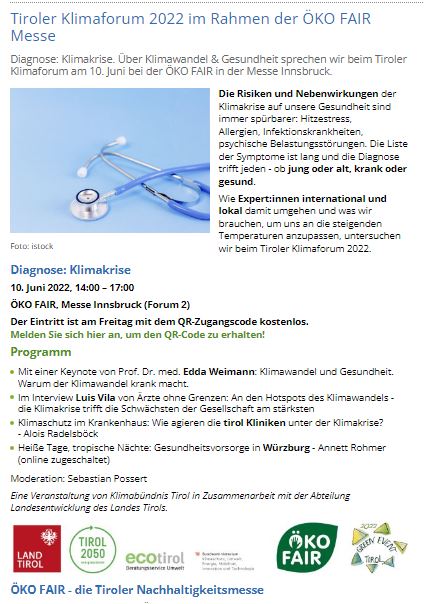
Our governments have a social responsibility to disseminate clear and unadorned climate facts and to explain the reasons, causes and effects of the climate crisis. The Climate Alliance Tyrol has taken on this task and has organised an event on the climate crisis for the general public. Politicians and the population can only make evidence-based decisions if everybody is aware of the facts, causes and effects of the climate crisis. As the health and future well-being of the population are core areas of state responsibility, this is a task that transcends party politics.
It is a great honour for me to have been invited to give the keynote speech on the topic of “Why climate change is making us sick” and to have been able to contribute to climate literacy
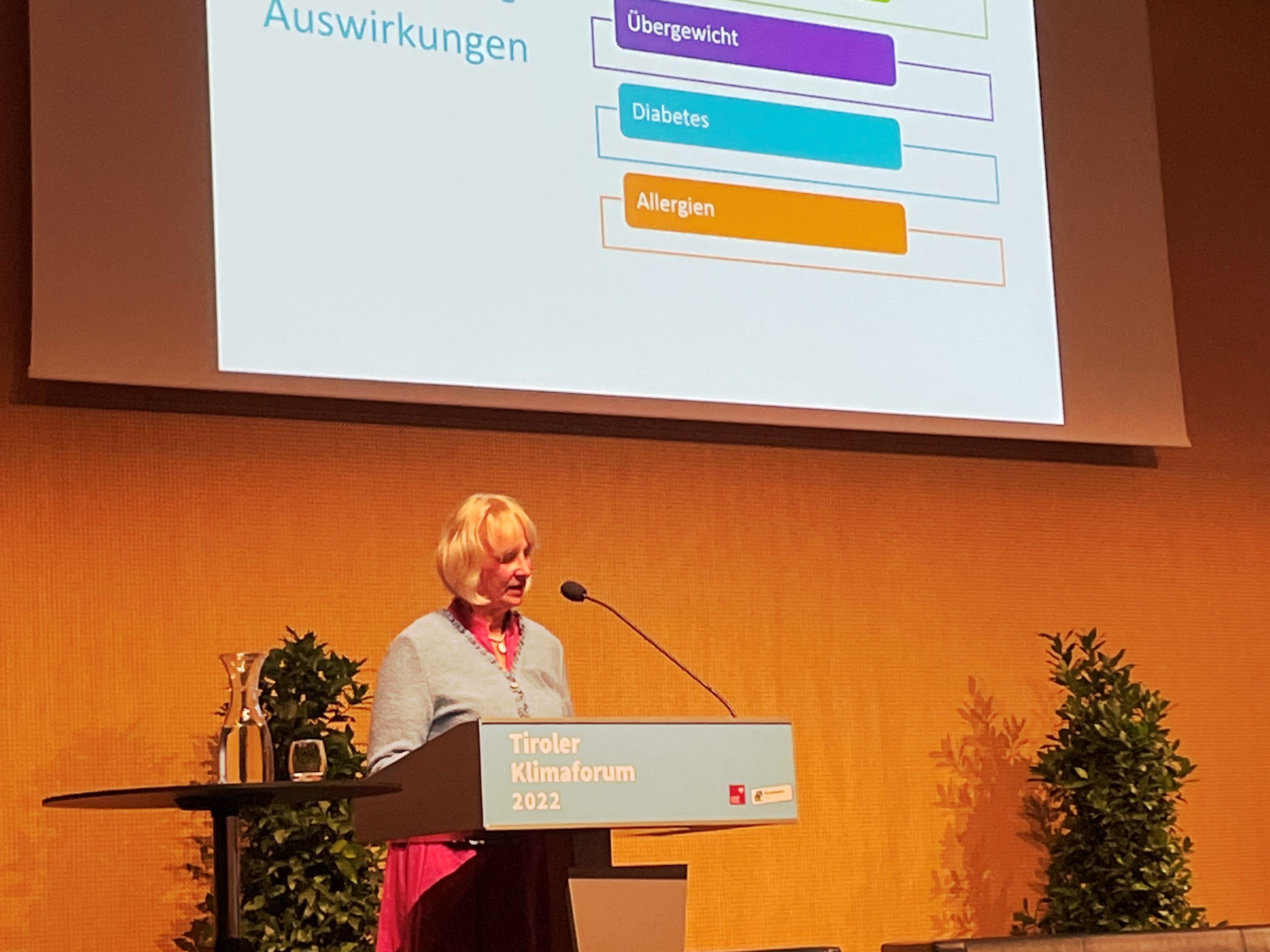
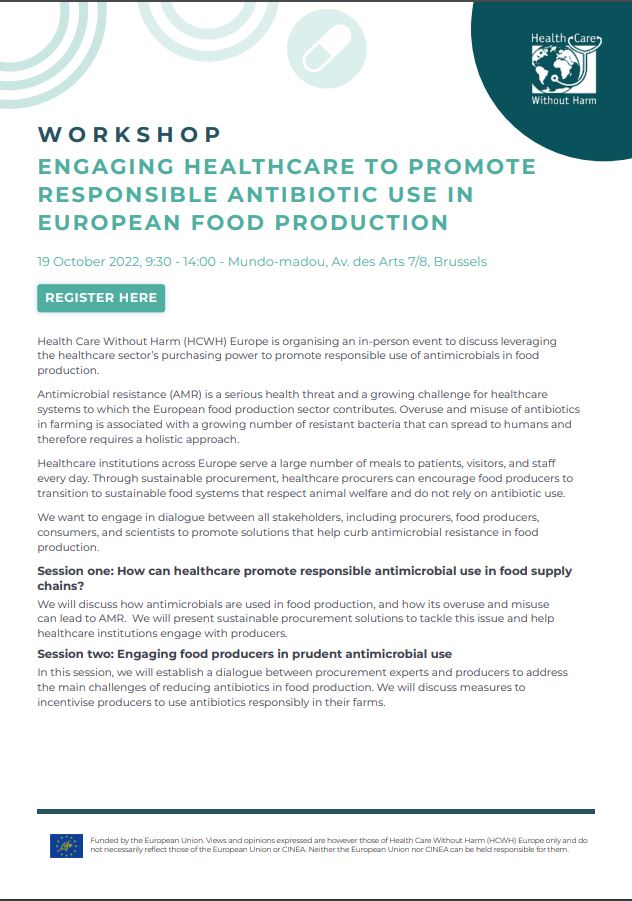
HCWH, Brussels, October 2022
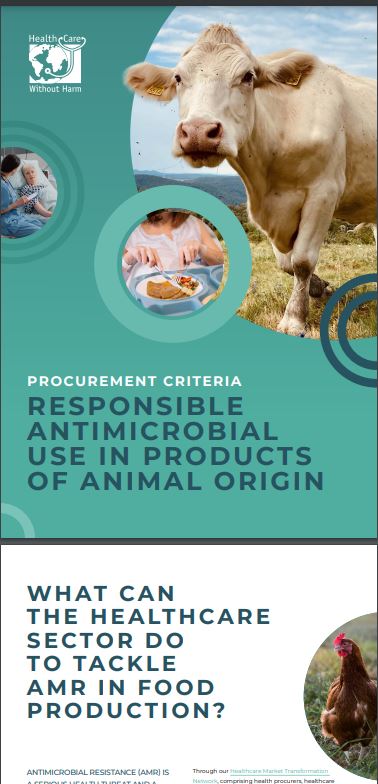
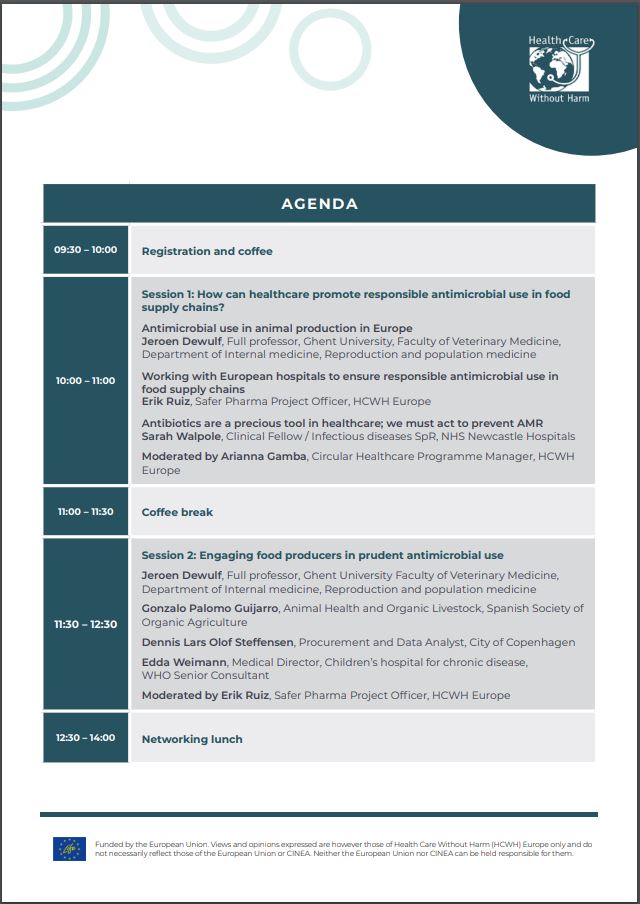
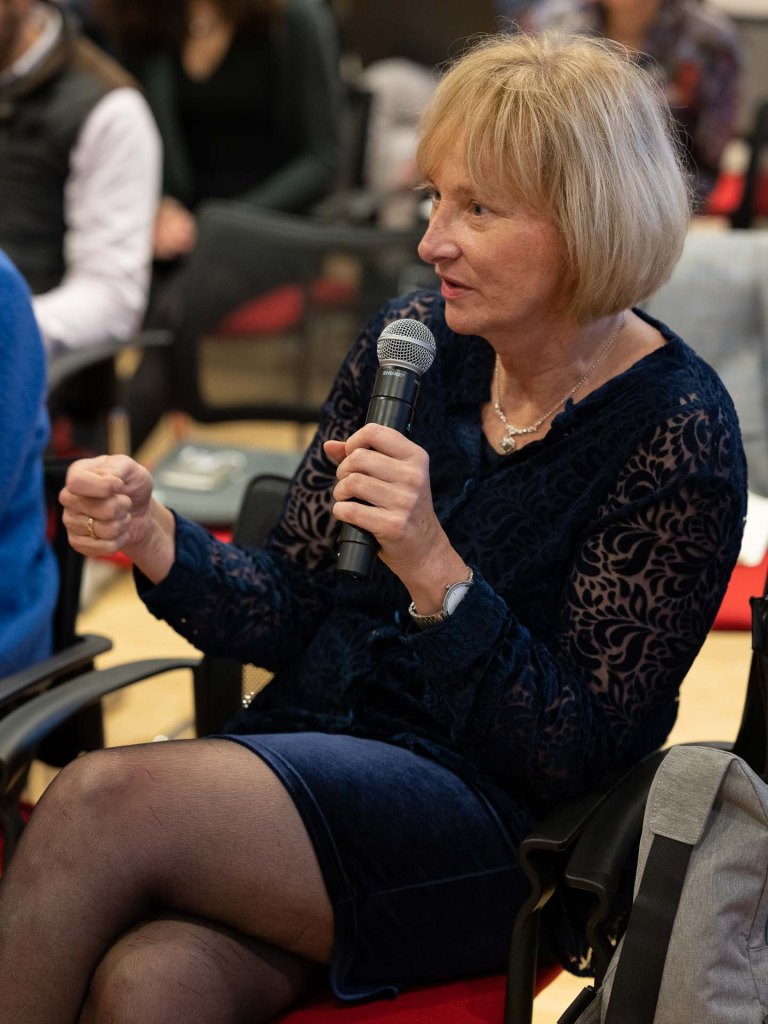
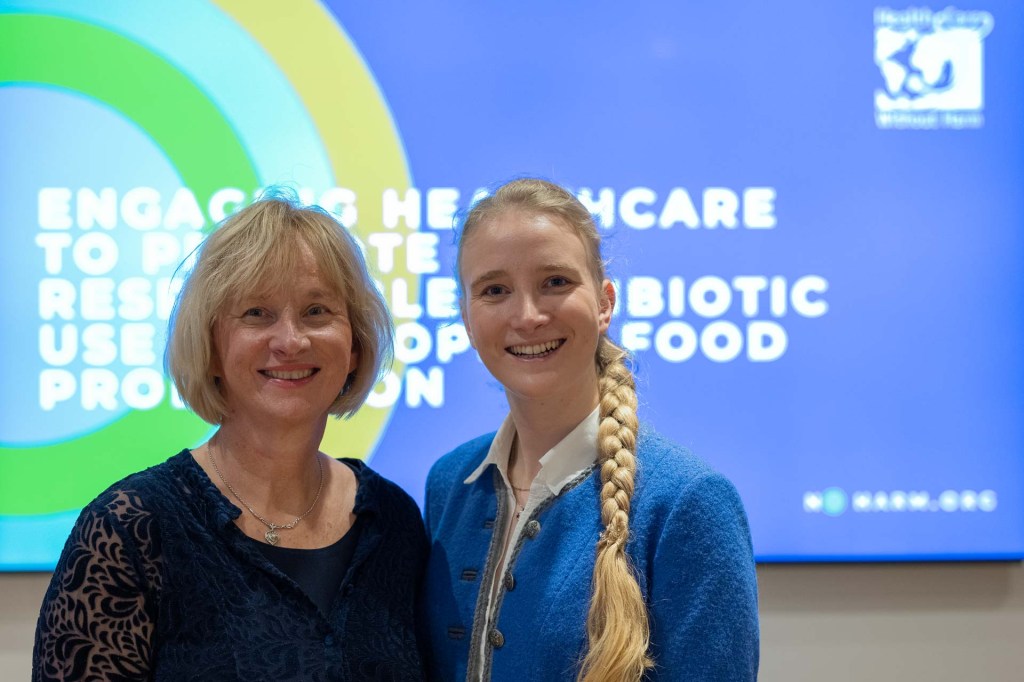
Antimicrobiotics in meat – how hospitals can make a difference
Over the past weeks we created a guideline together with HCWH how hospitals can make a difference to phase out microbiotic use in meat and reduce microbiotic infections in the population. On the road to a sustainable and healthier future.

BVKJ Conference, Munich 24 September 2022
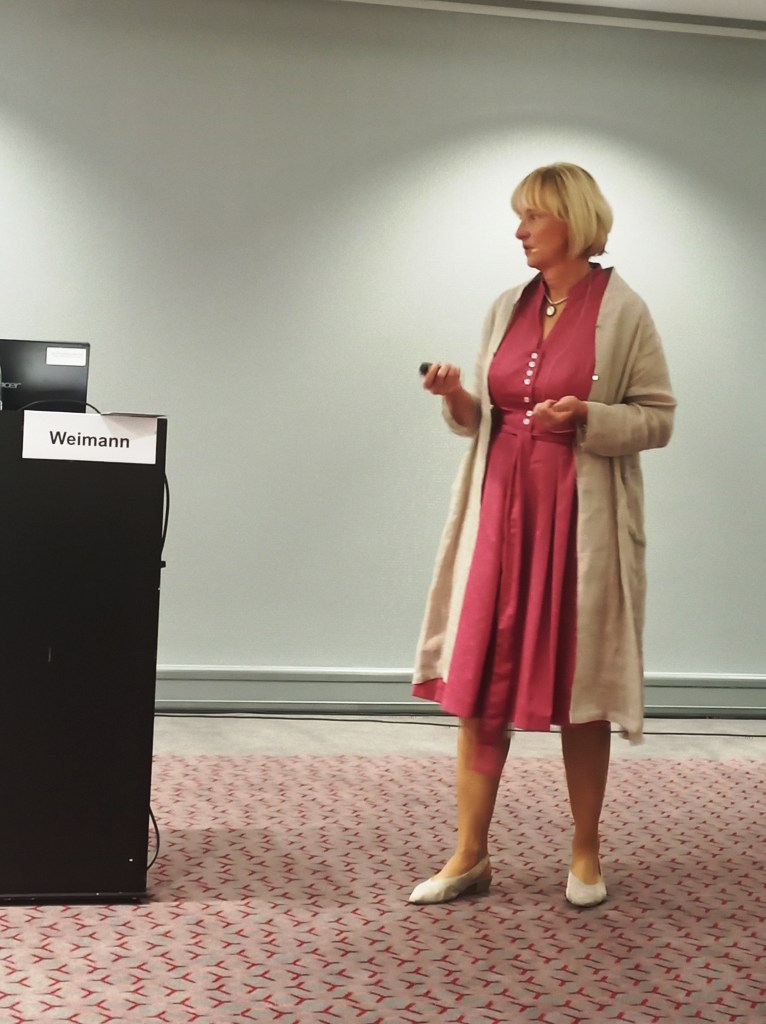
How to implement sustainable health care facilities
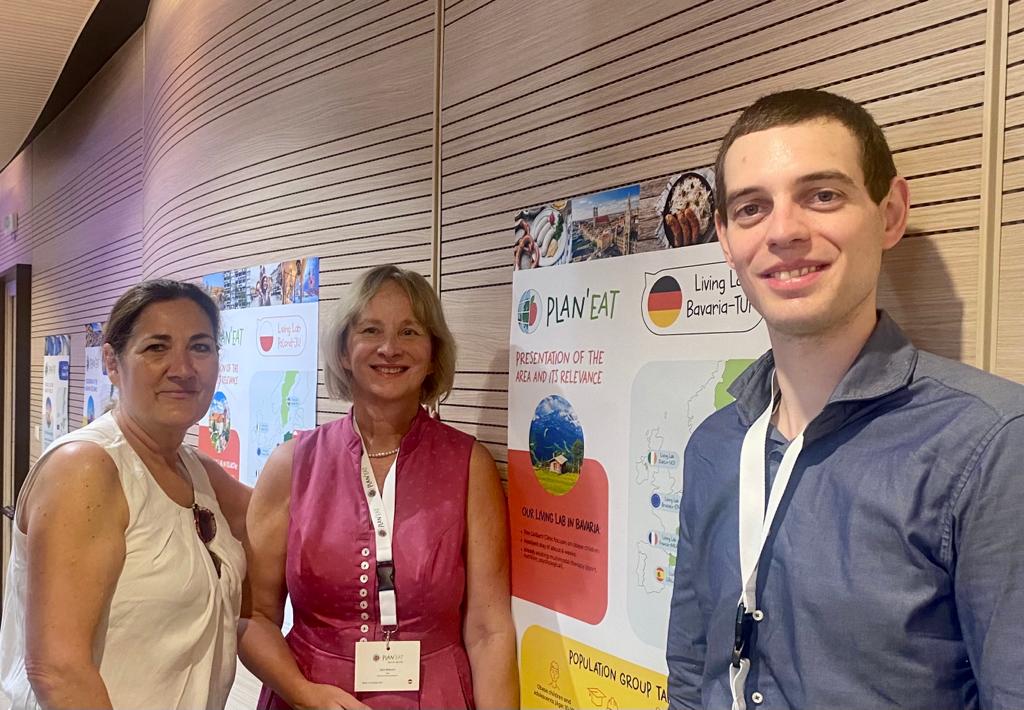
Horizon Europe 2020, Rom, 4 October 2022
Research Grant meeting, PLAN´EAT
The current agricultural system produces 15% greenhouse gas emissions and a significant loss of biodiversity. If we intent to tackle Climate Change and avoid Climate breakdown, we need to change our food system to become more sustainable. Hospitals play an important role in leading the change and offer healthier food. Over the past years I had implemented as the medical director of a Children`s hospital sustainable food measures such as a meat free day, reduction of food waste and use of single use plastics, local suppliers and a vegetable garden. The EU has granted us as a TUM team a research fund to implement plant based food in a hospital and investigate the health benefits.
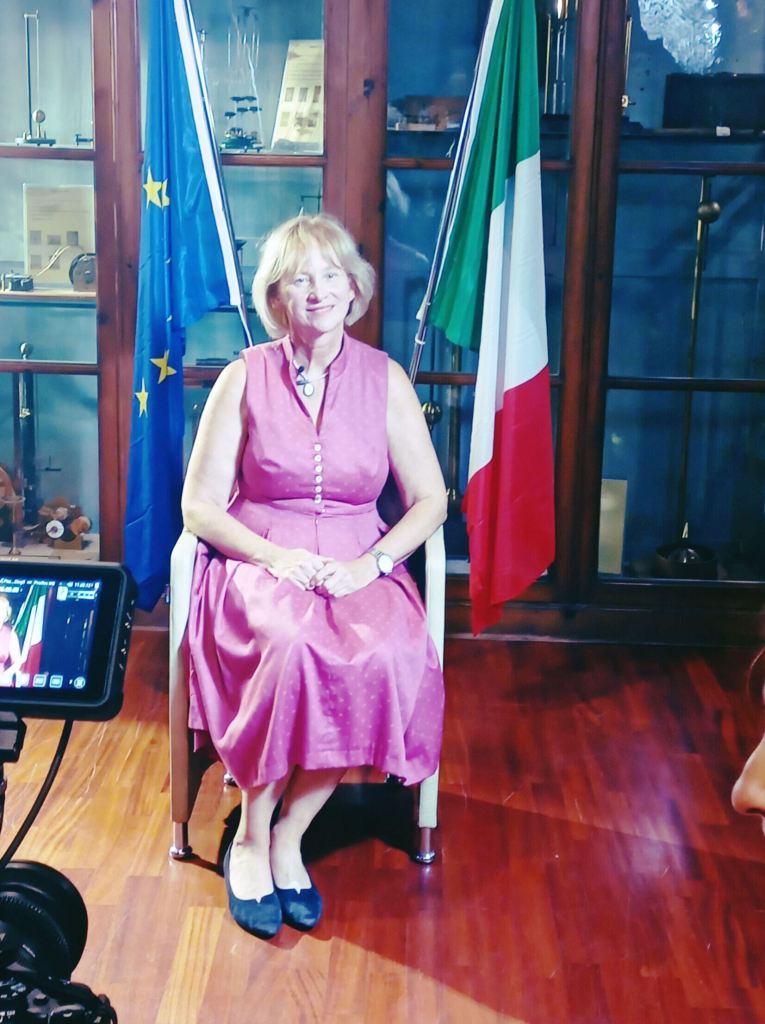
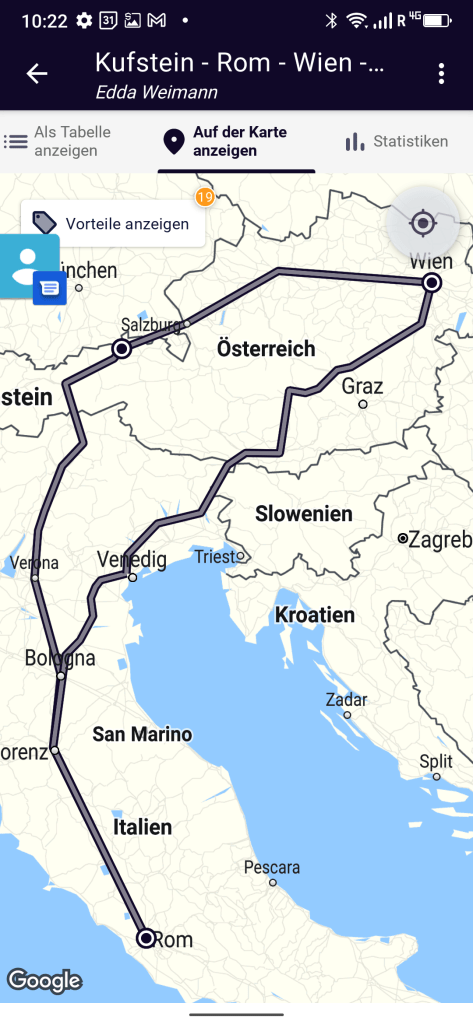
Sustainable travelling to reduce CO2 emissions. Flight under 1500 km are seldom quicker taking into account travel time to and from the airport, waiting times etc. One of the reasons why France has now abandoned short haul flights. One first step.
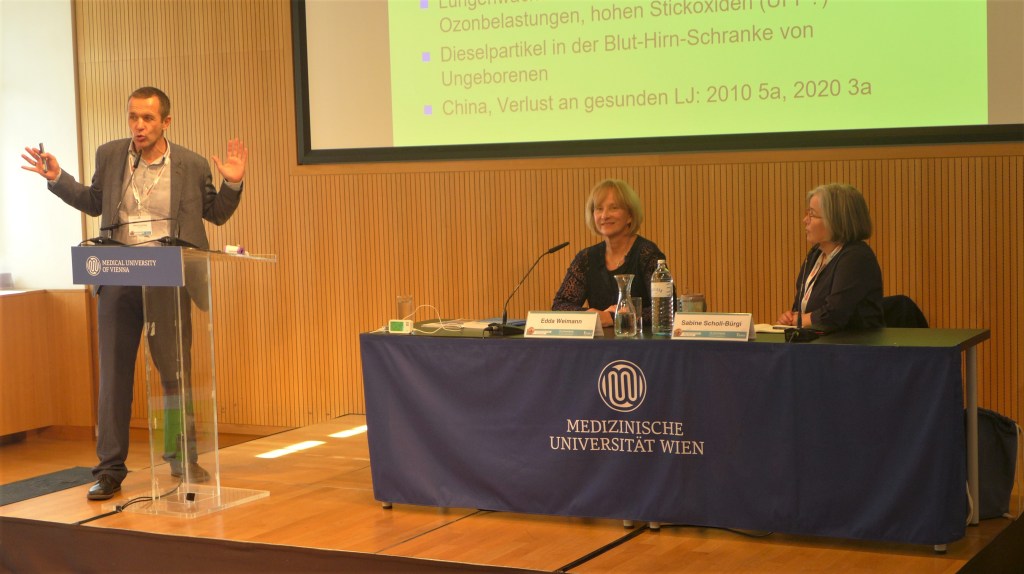
60th conference of the Austrian Society for Child Health, Vienna, 6 October 2022
Panel & talk: Healthy hospitals
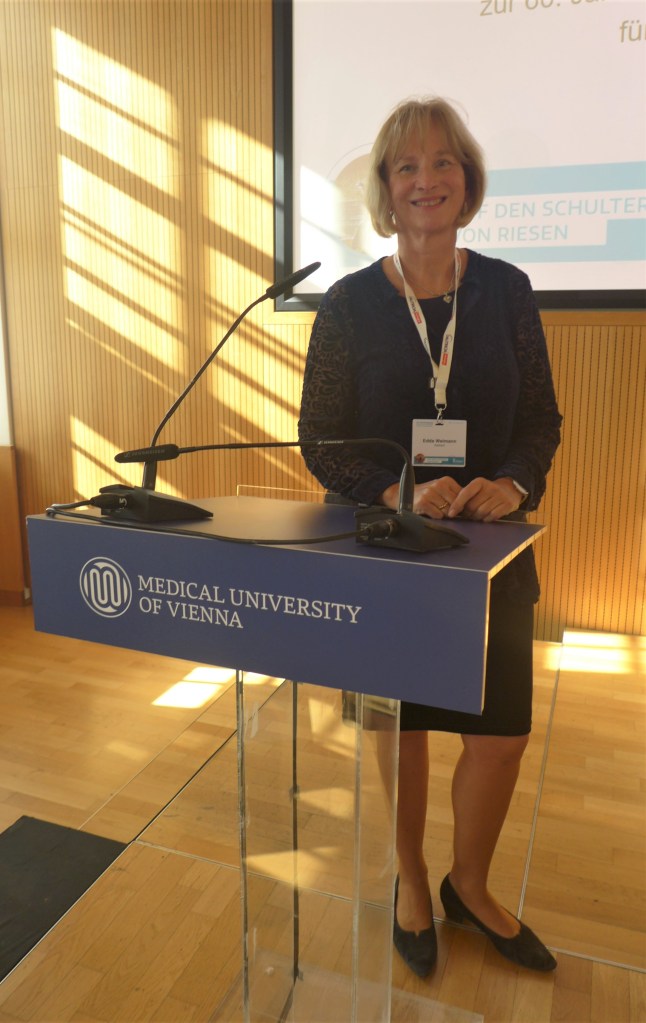
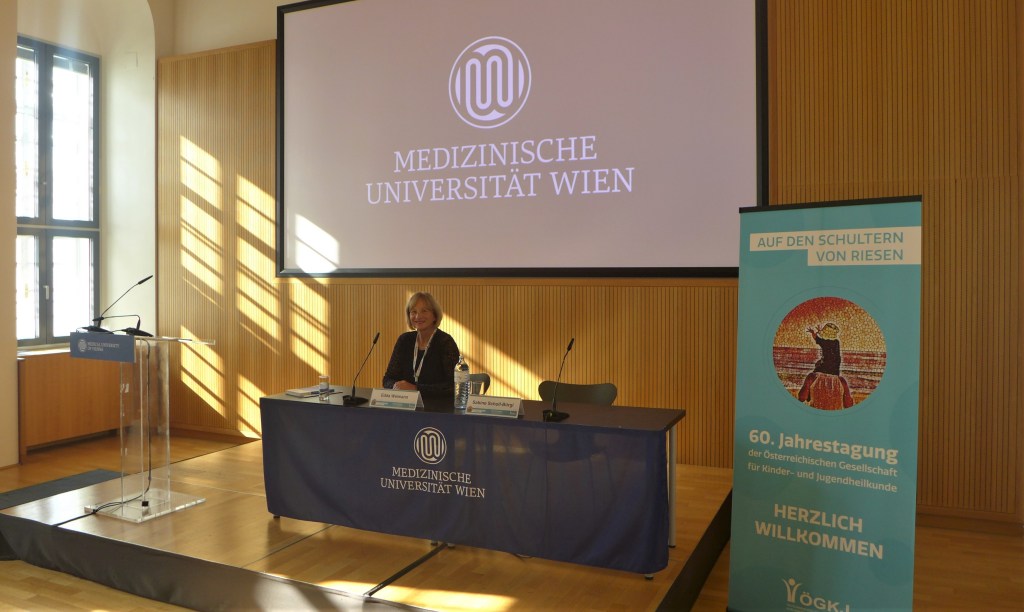
Topics: Impact of Climate Change on Child Health & Healthy hospitals
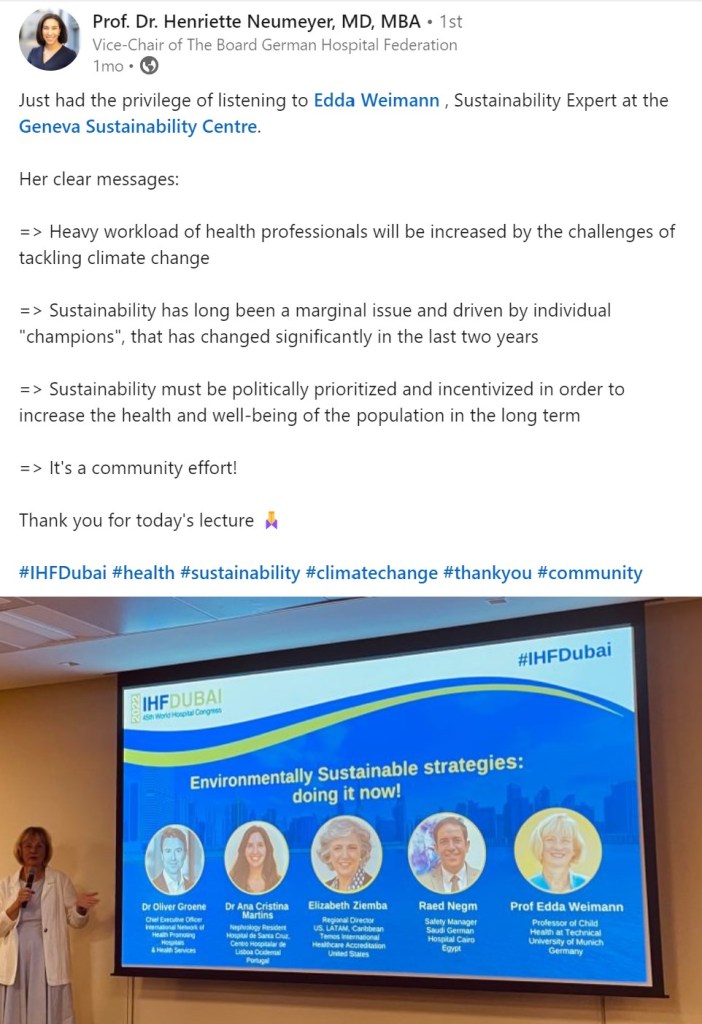
IHF World Hospital Conference, Dubai, November 2022
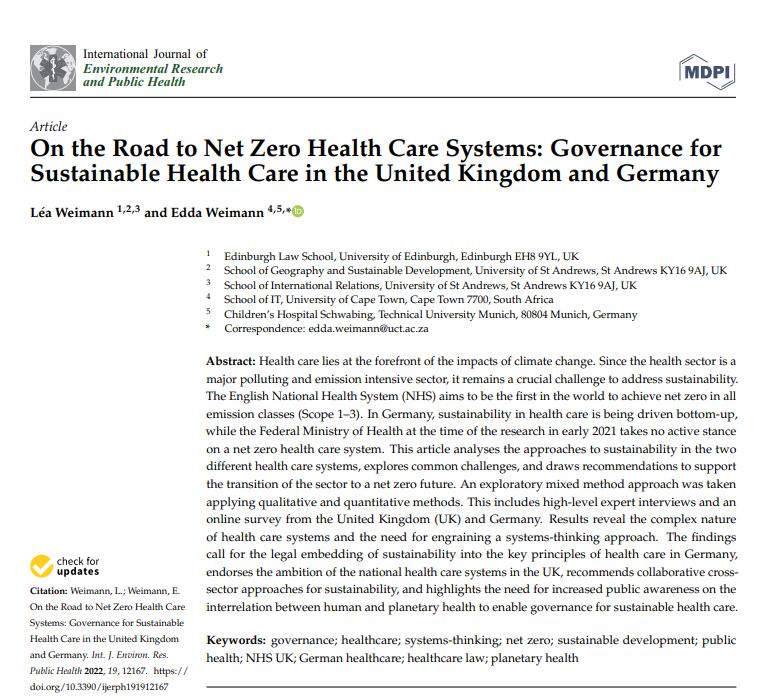
On the road to net-zero health systems
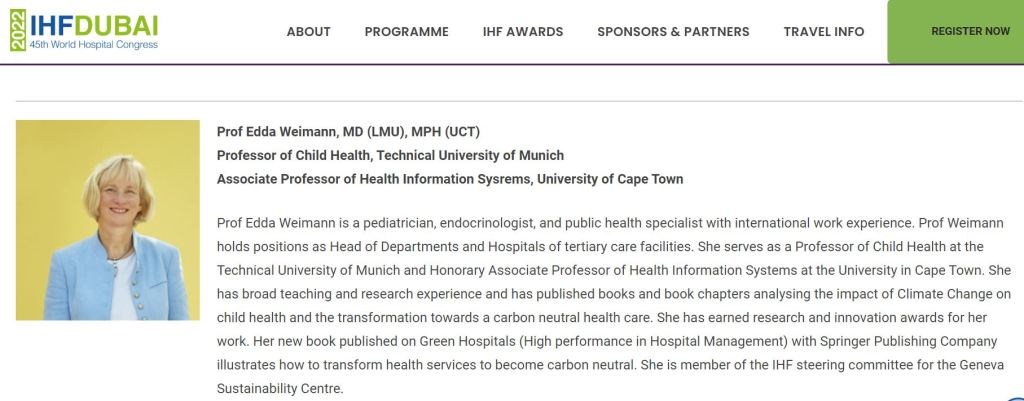
The IHF conference will take place in November 2022. I am truly honoured to be member of the selection committee 2022 of the prestigious sustainability hospital awards.
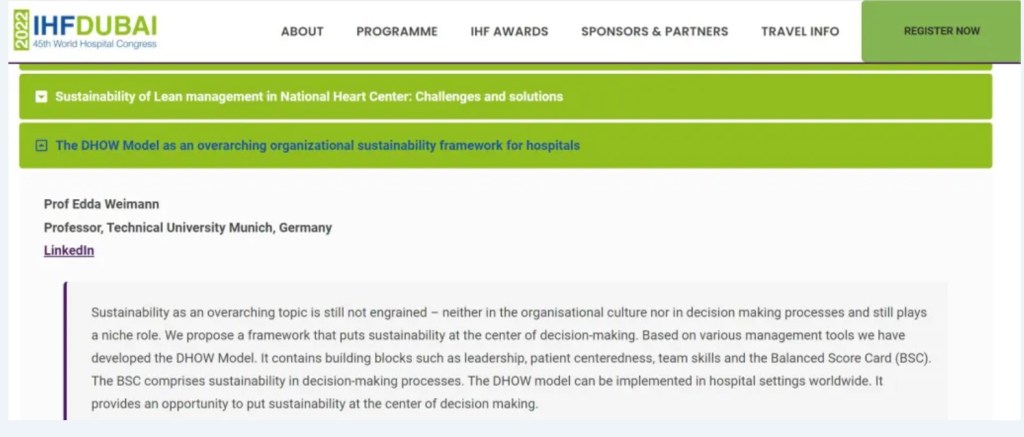
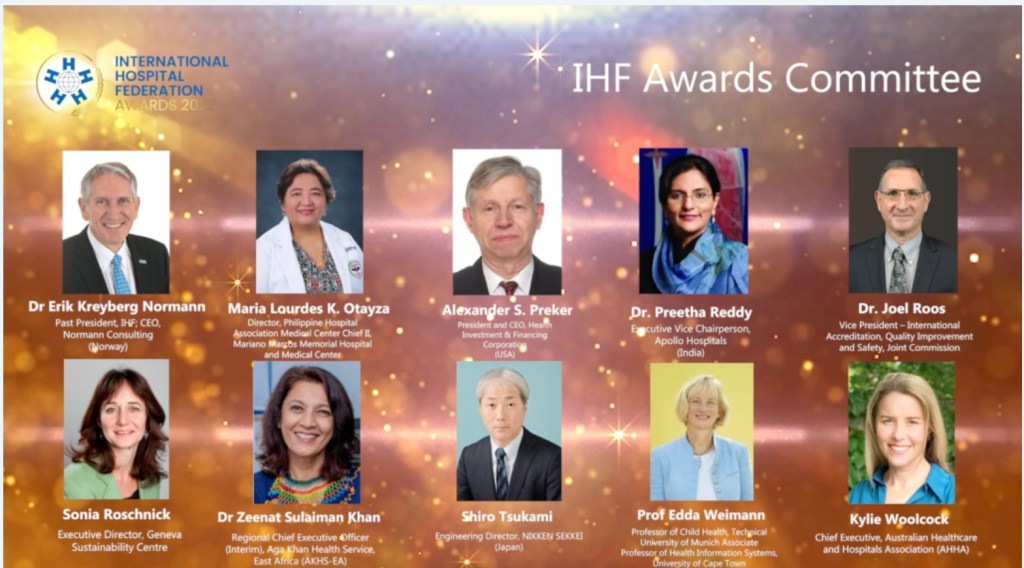
Session chair – towards a sustainable future
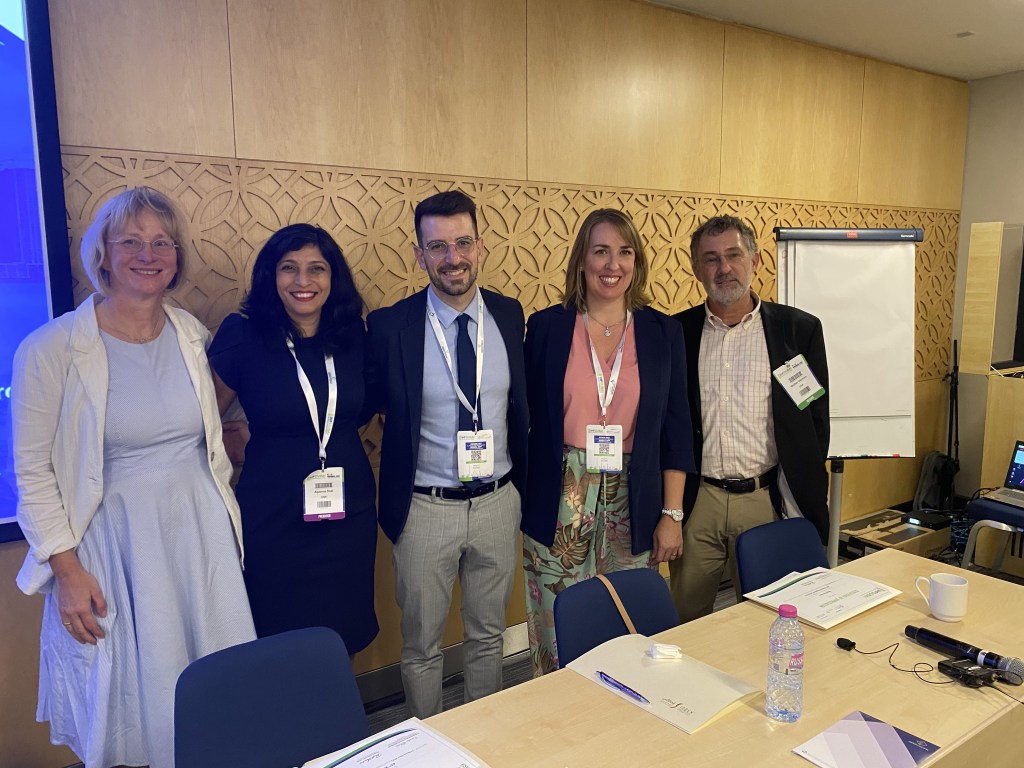
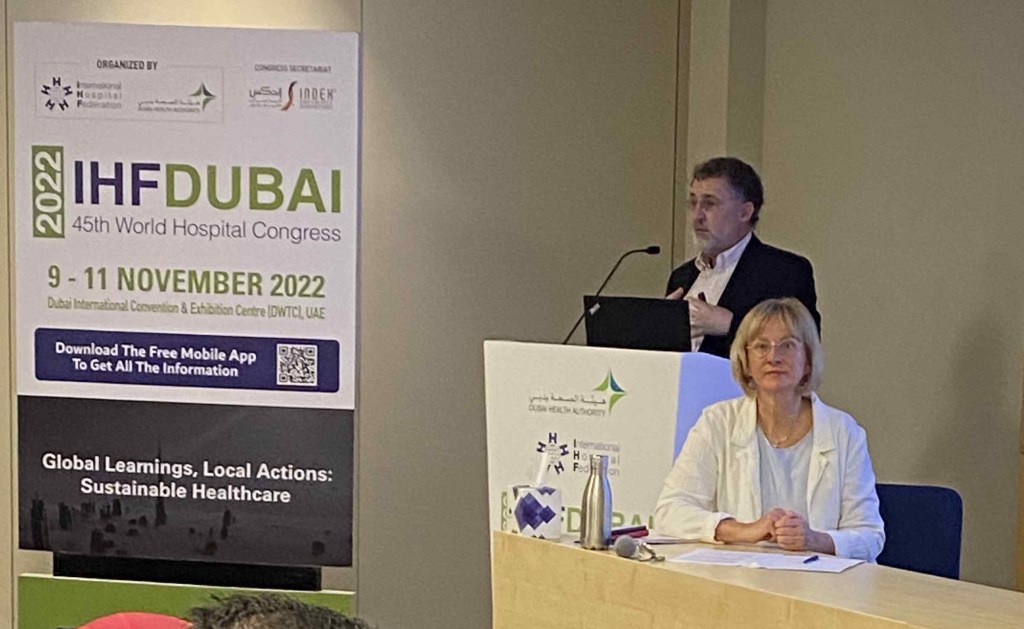
Vortrag “On the road to net zero health care systems”
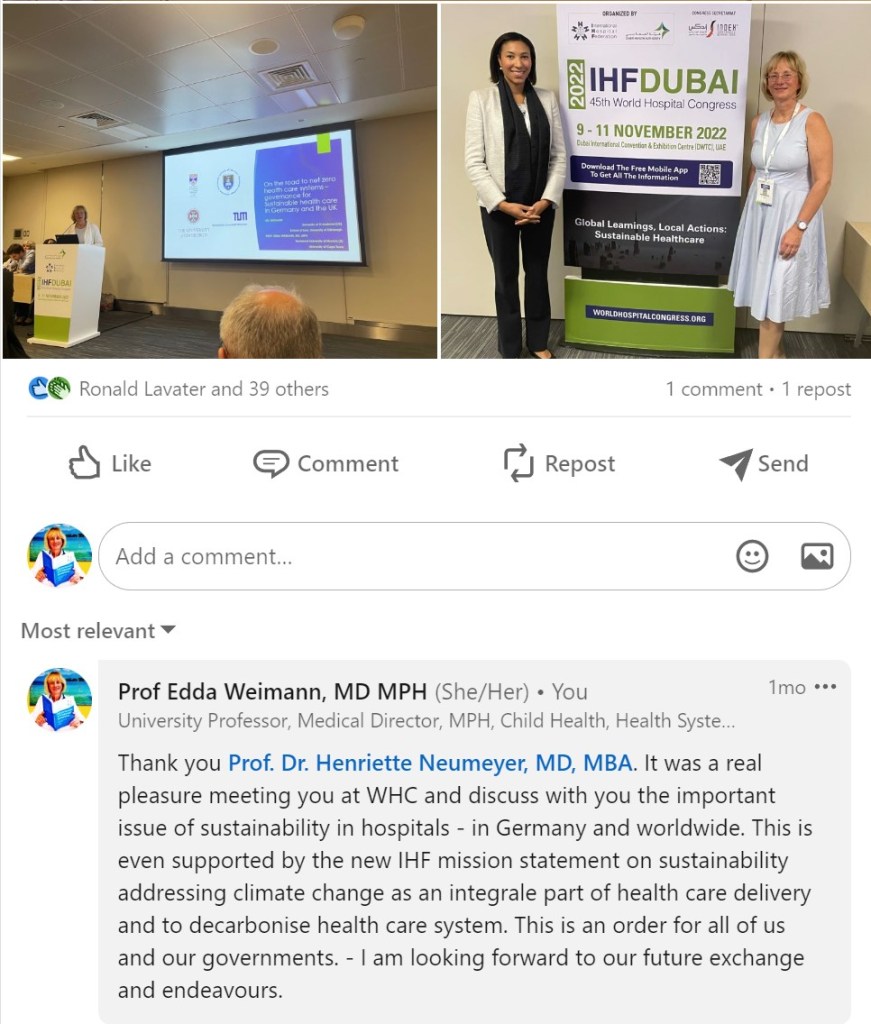
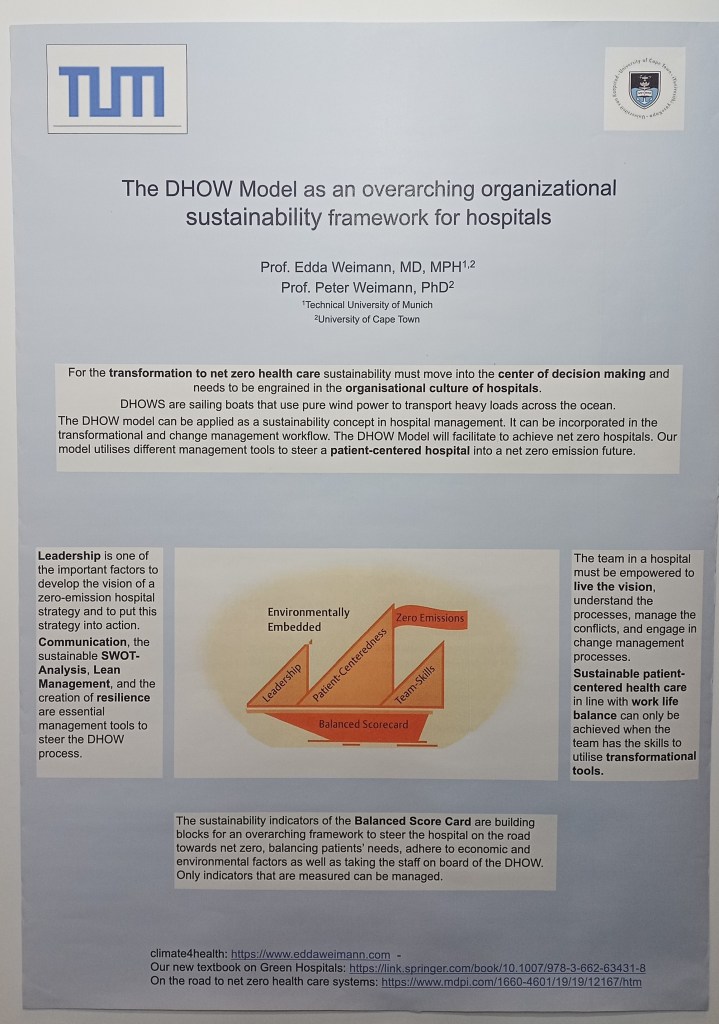
Presenting the sustainable Balanced Score Card and DHOW Model
German Hospital Association (DKG) Conference, Berlin, December 2022
Net-zero hospitals: Personal international experiences
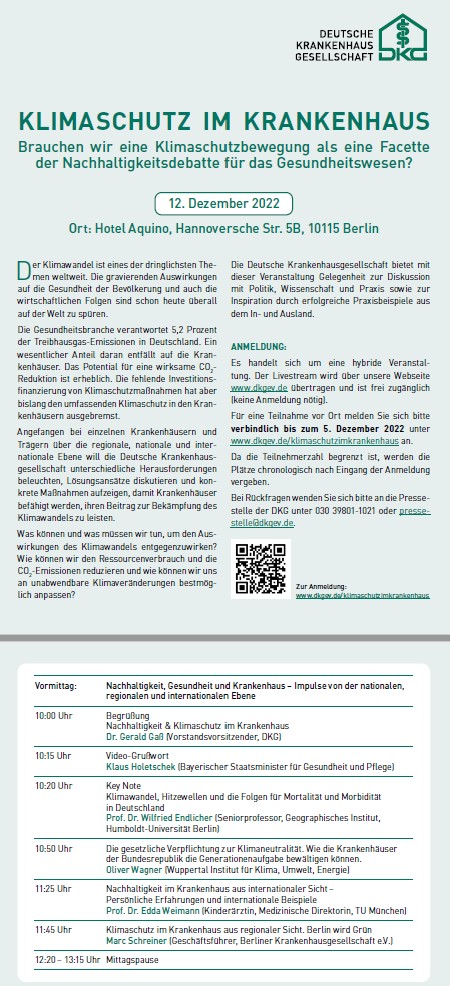
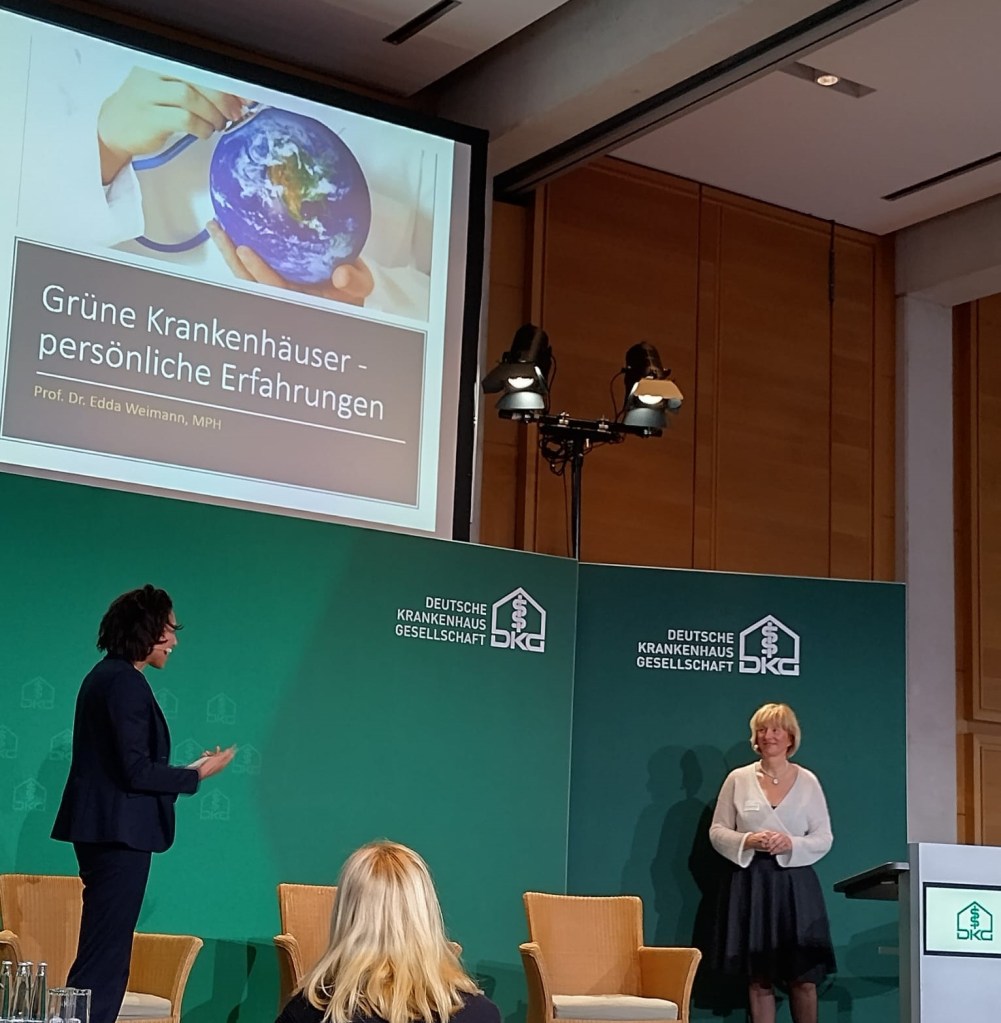
Prof Henriette Neumeyer and Prof Edda Weimann
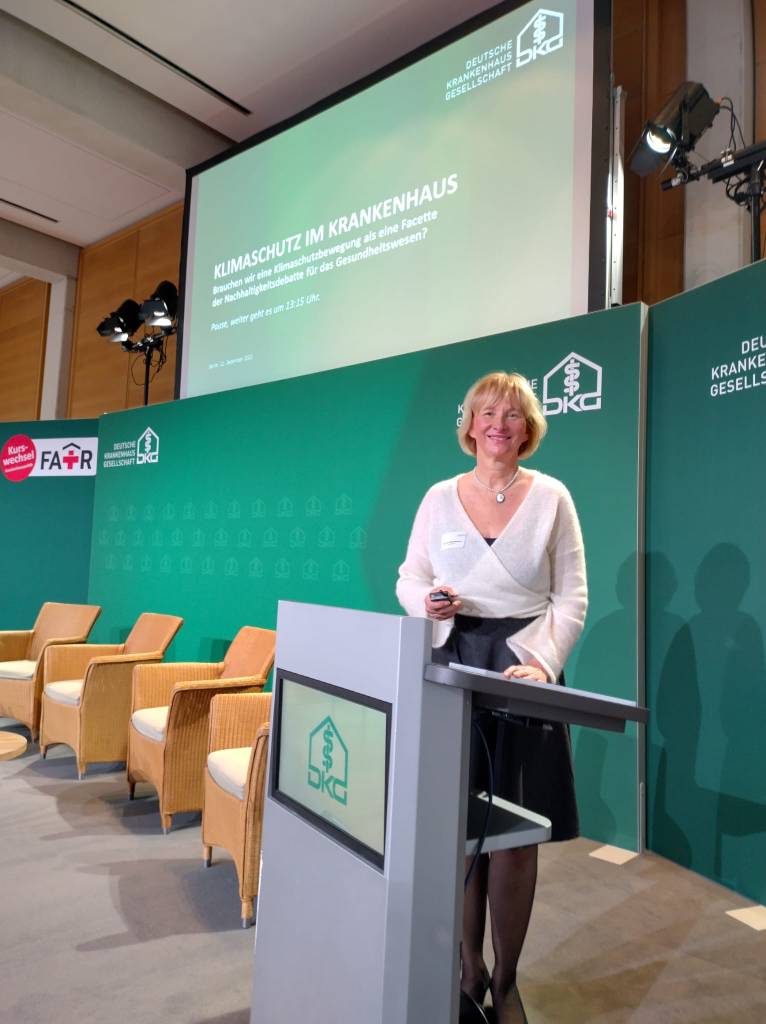
Link to lecture (from 1h29 min onwards)
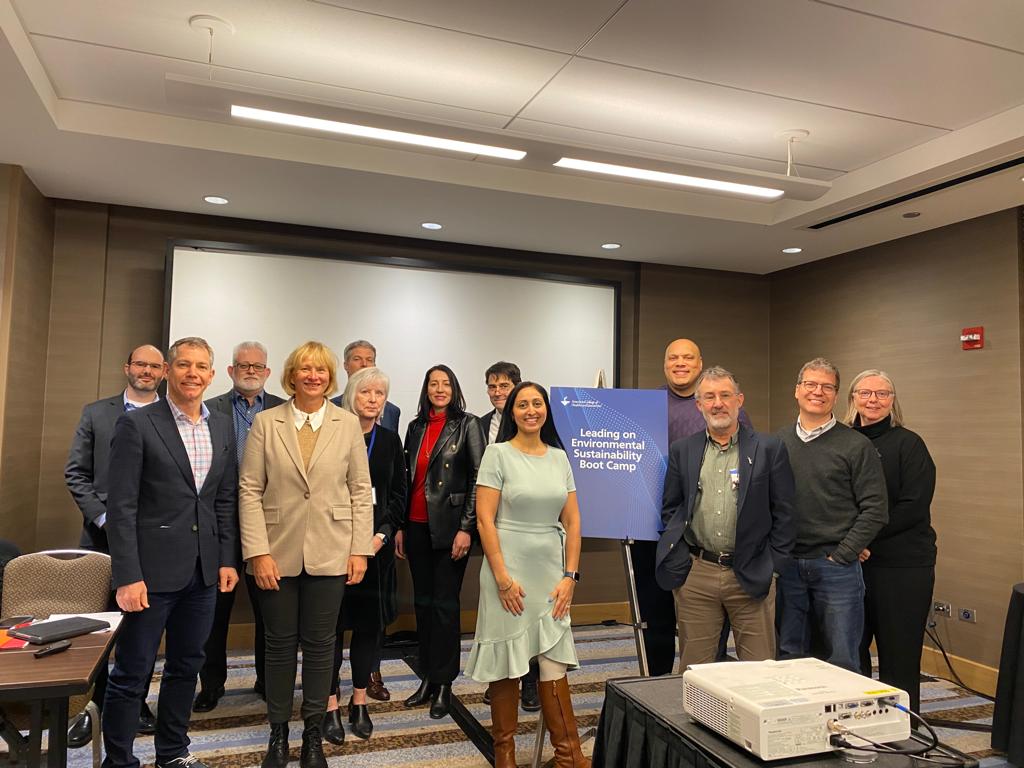
American College of Health Care Executives (ACHE), Chicago, March 2023
First Boot Camp on sustainable net-zero hospitals

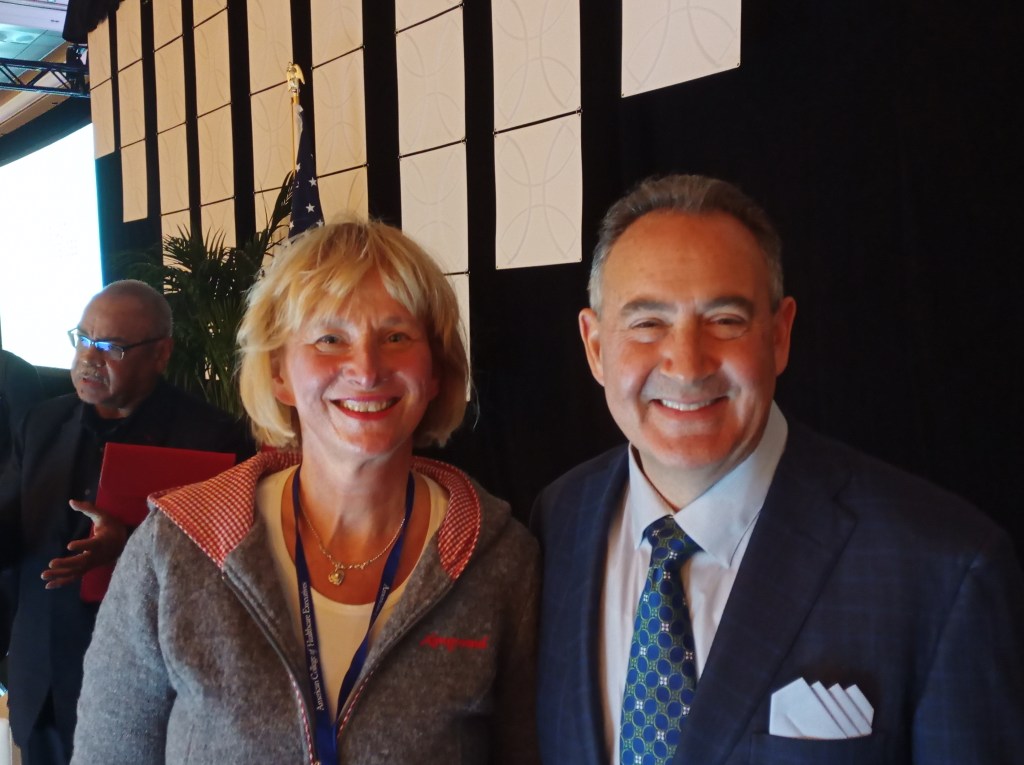
At ACHE – meeting with Jonathan Perlin, President and CEO of the Joint Commission and Joint Commission International
2nd Africa Health Excon, Cairo 6 – 9 June 2023
The future of health care – How to lead. adapt and thrive in a digital and green world
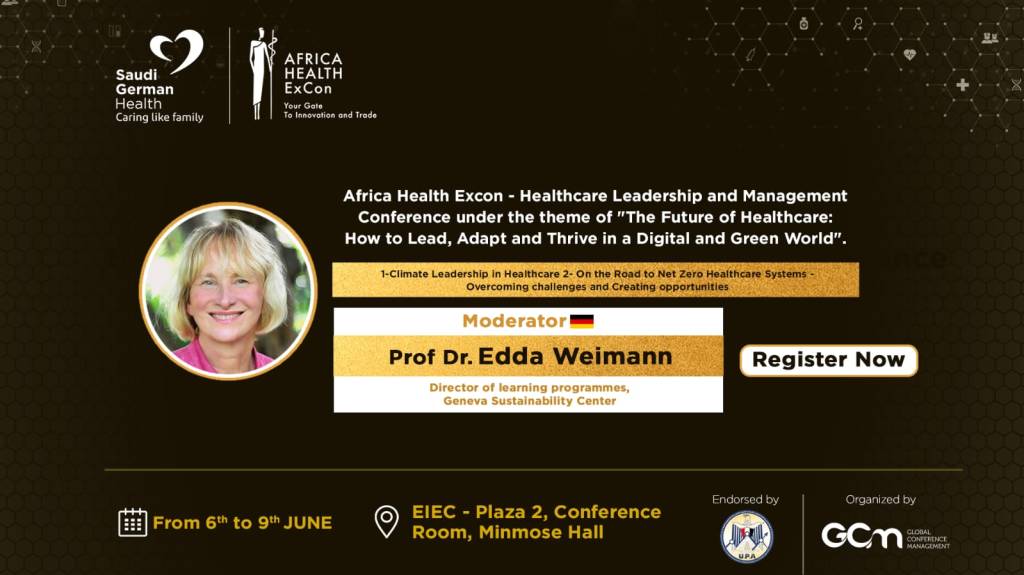
Climate Healthcare leadership (Panel and workshop) – overcoming challenges and creating opportunities
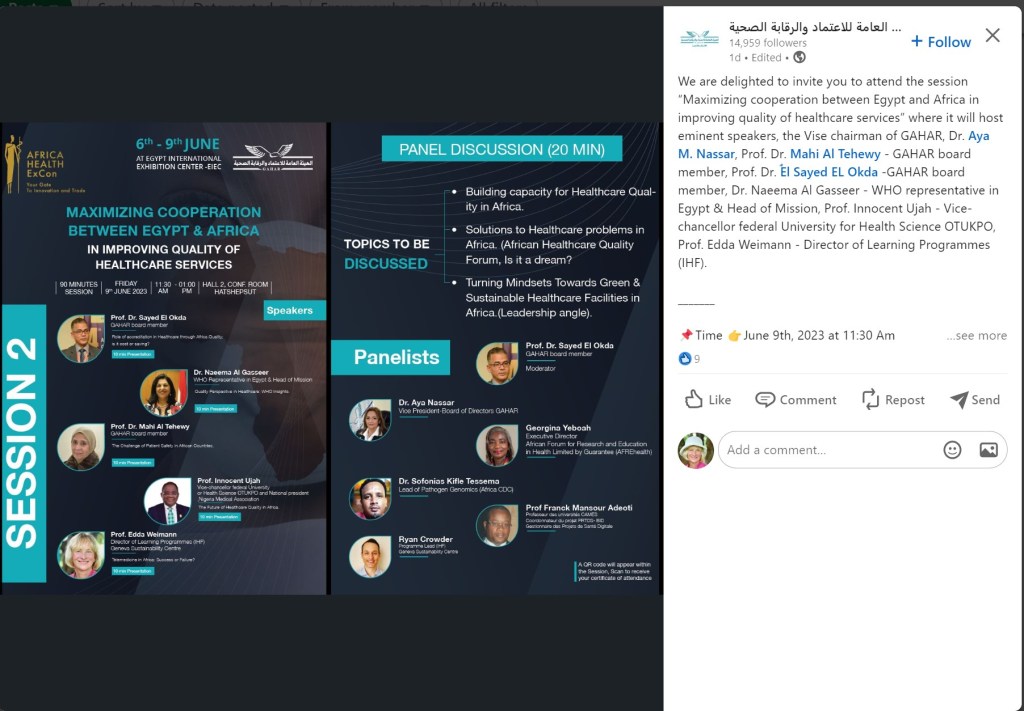
e-health in Africa – success or failure (hosted by General Authority for Healthcare Accreditation & Regulation/GAHAR)
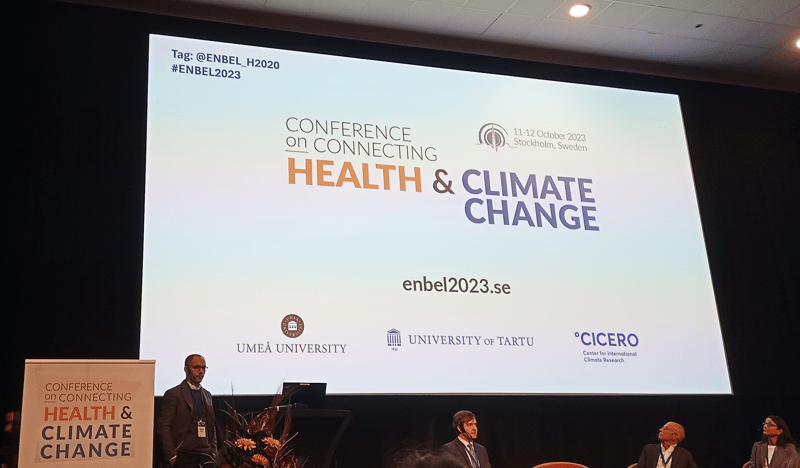
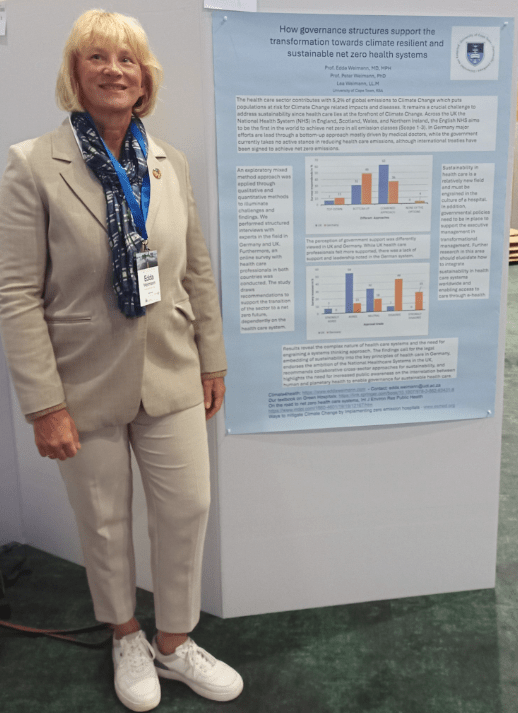
ENBEL Health & Climate Change Conference, Stockholm, October 2023
How governance structures support the transformation towards climate resilient sustainable net-zero health systems
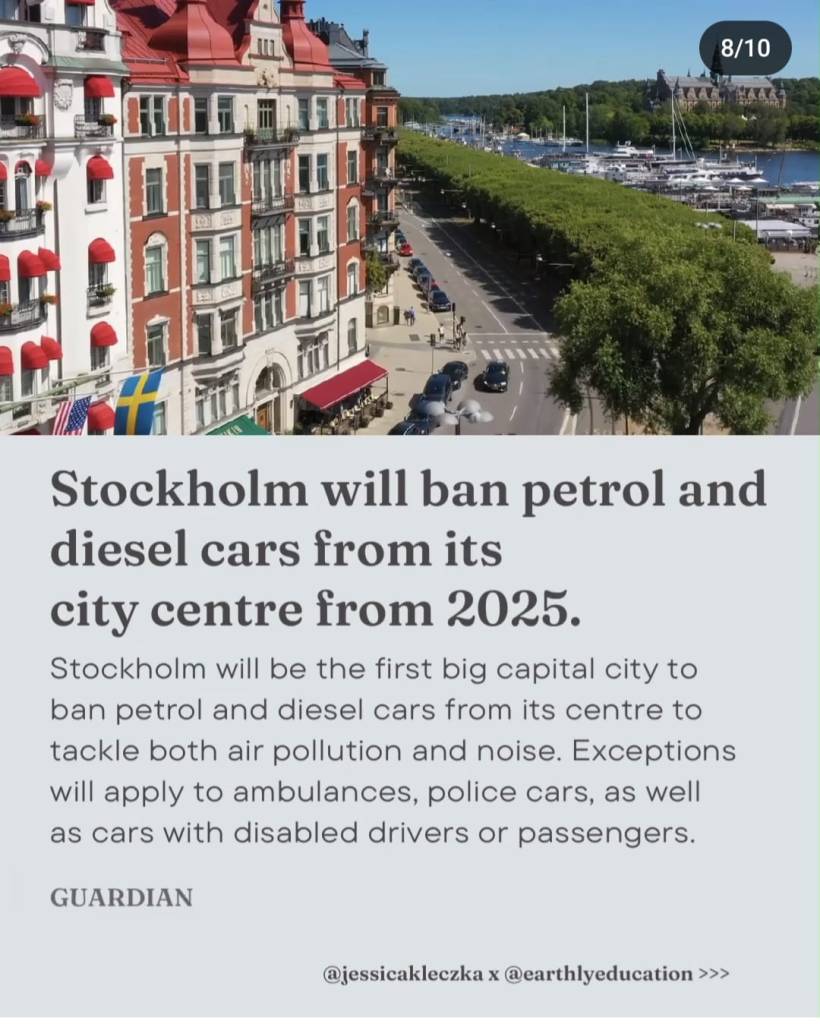
Some countries (Denmark, Sweden, Finland, etc.) are already leading the way into a healthy and fossil fuel free future
ENVIRONMENT and HEALTH
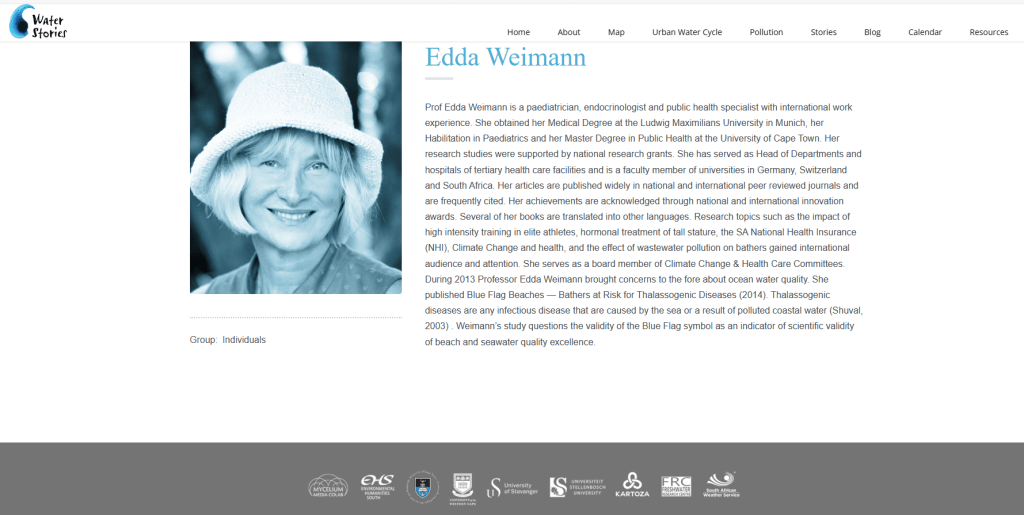
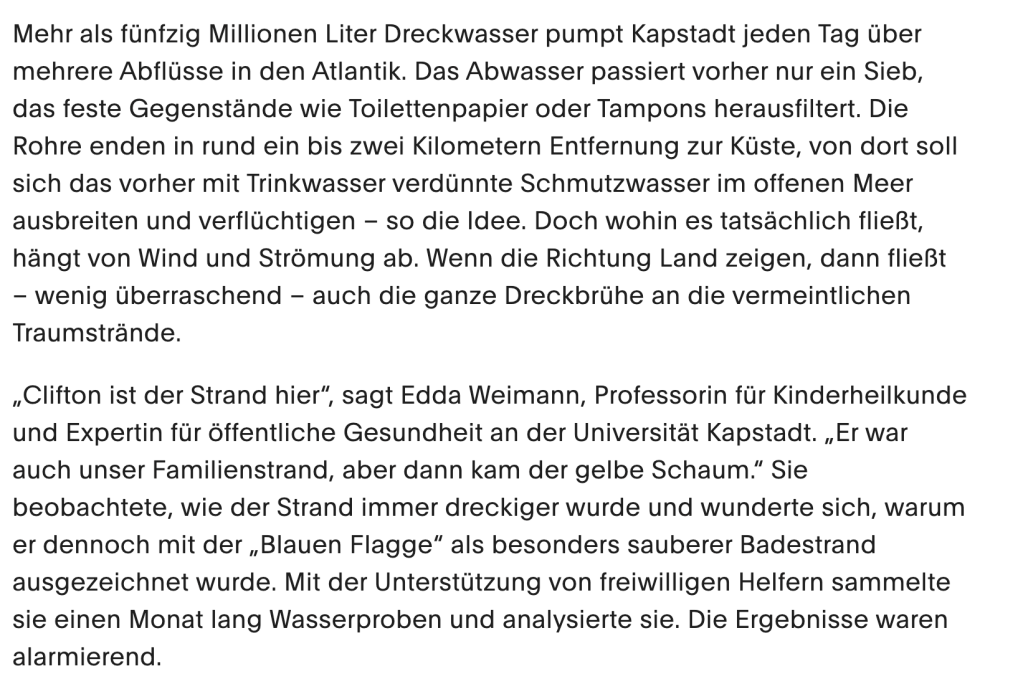
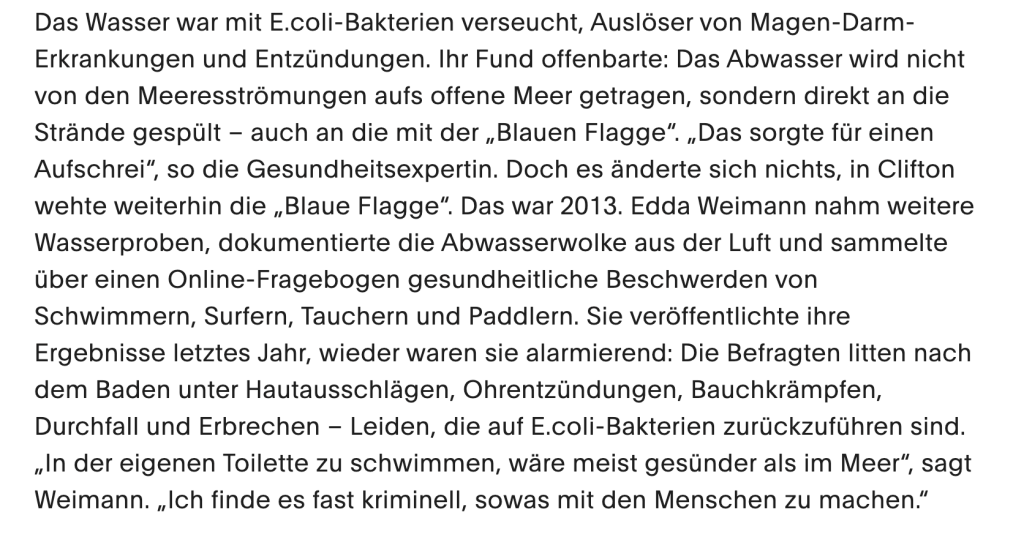
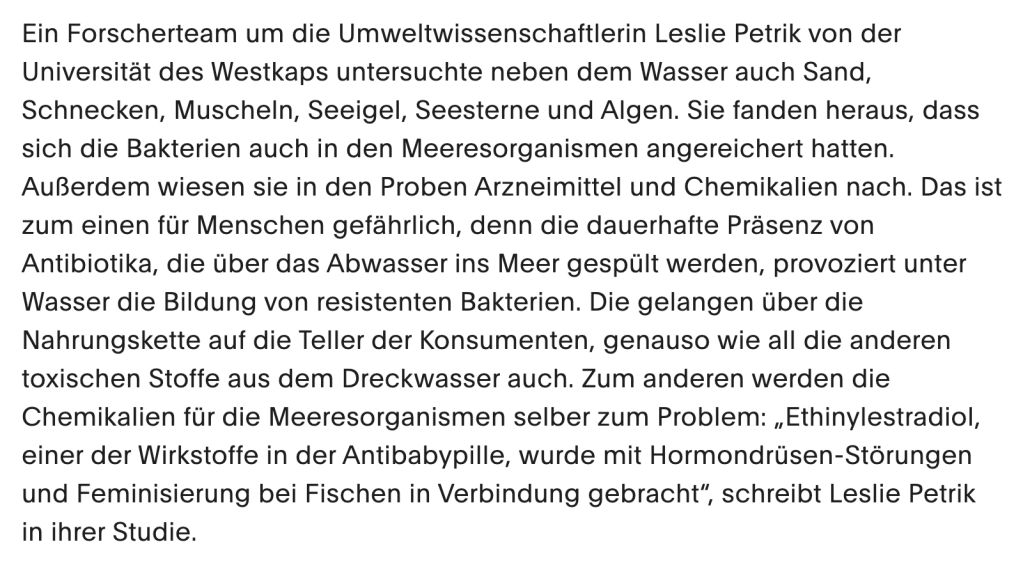
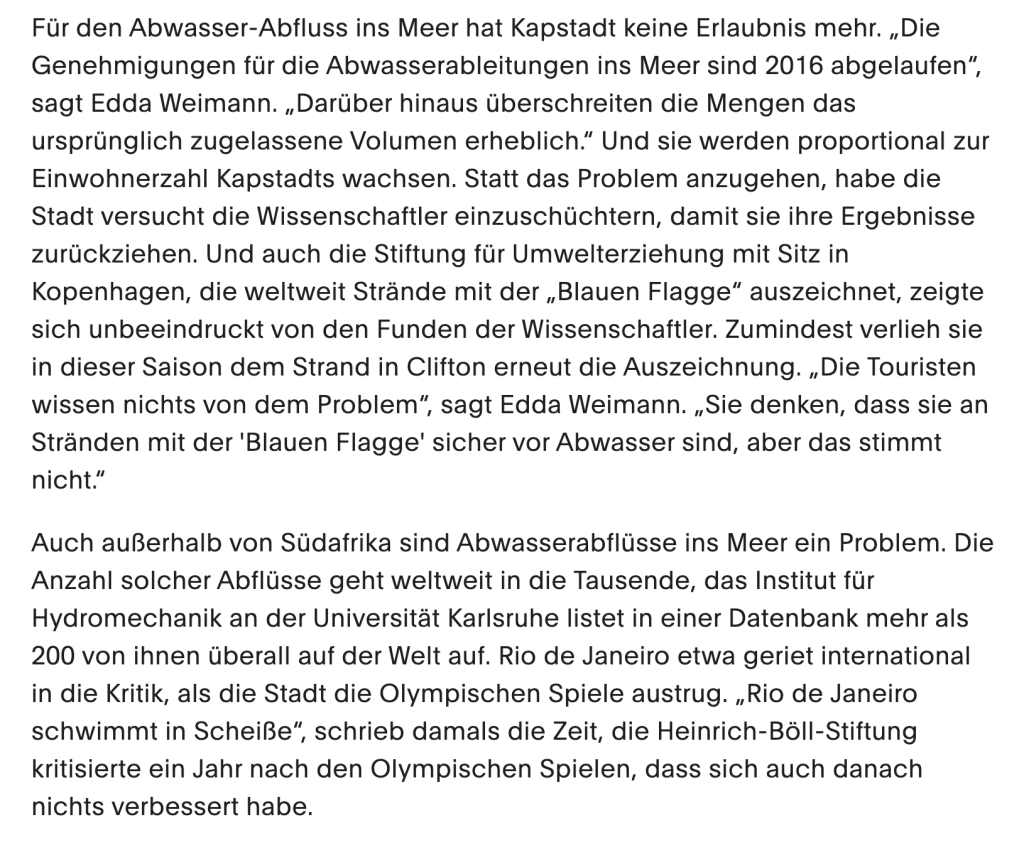
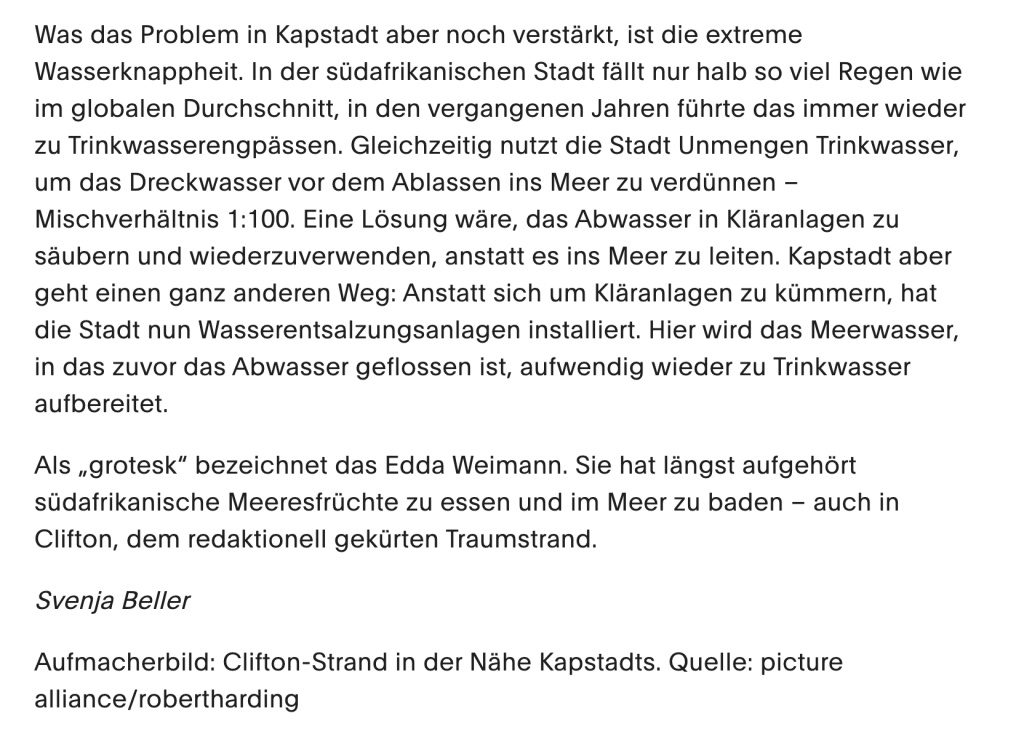
Waste-water discharge into Atlantic Ocean in Cape Town
Wastewater discharge and thalassogenic diseases are are world wide problem. Most coastal cities and villages still lead their sewage often untreated into waterways and oceans resulting in wastewater related diseases of recreational bathers. Besides, marine wildlife, ecosystems and fish are polluted by multiple toxins such as bacteria (e,g, E. coli), virus, chemicals, pharmaceuticals and fossil fuel. This practice adds additional strain to our oceans on top of the climate crisis.
I was spearheading a grass-root movement and citizen-centred research initiative.

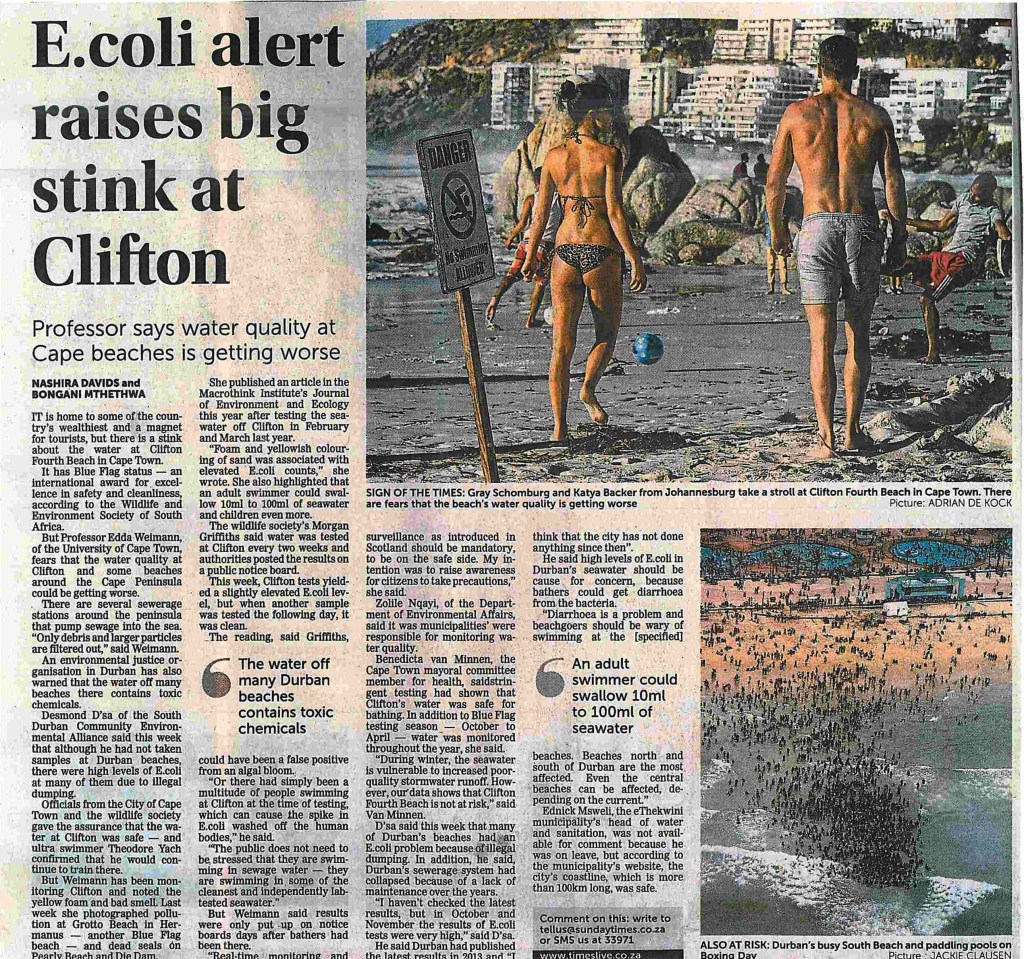
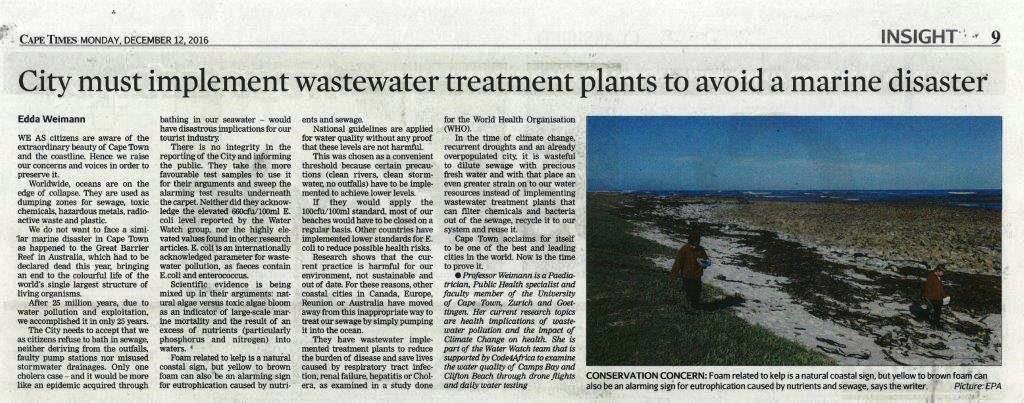
Waterstories

Article link Greenpeace Magazine
Implementation of an Ecocide Law
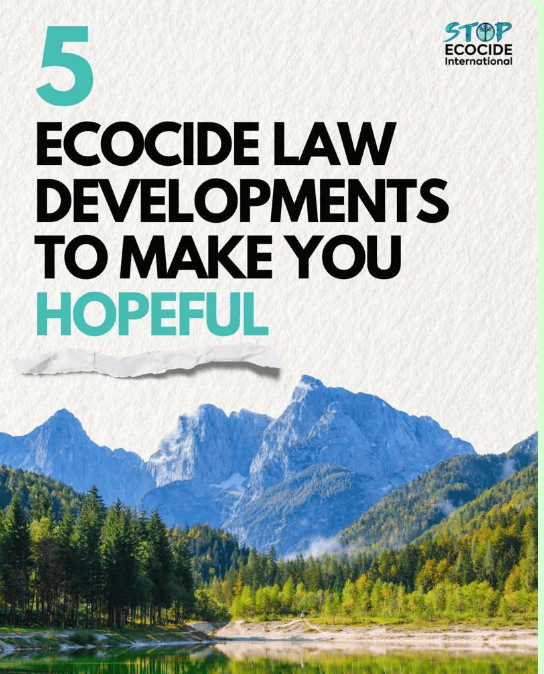
Five major developments from the movement to recognise ecocide – mass destruction of nature – as a serious crime:
1️⃣⚖️ There is now a formal proposal to make ecocide the fifth crime tried at the International Criminal Court – championed by Vanuatu, Fiji, Samoa and the DRC.
2️⃣ 🏞️ Domestic ecocide laws have been introduced in Belgium, Mauritius, France and Azerbaijan, while at least 15 countries are advancing ecocide bills.
3️⃣🇪🇺 The European Union and Council of Europe have recently legislated for serious environmental crimes akin to ecocide.
4️⃣🌍 African leadership is growing: Africa’s environment ministers last year agreed to make ecocide a top priority for the continent and the DRC has become a leading voice for ecocide law.
5️⃣🧑⚖️ Global legal precedents developing: The Inter-American Court of Human Rights, International Court of Justice and International Criminal Court have recognised serious environmental harm as a core international legal issue.
The shift toward recognising ecocide as a serious crime is well underway. Once marginal, this legal concept is now taking shape in state-level conversations, legal frameworks and courts worldwide.

